Young-Onset Diabetes in Cameroon: Diagnosing and Treating a Possible New Subtype
Overview
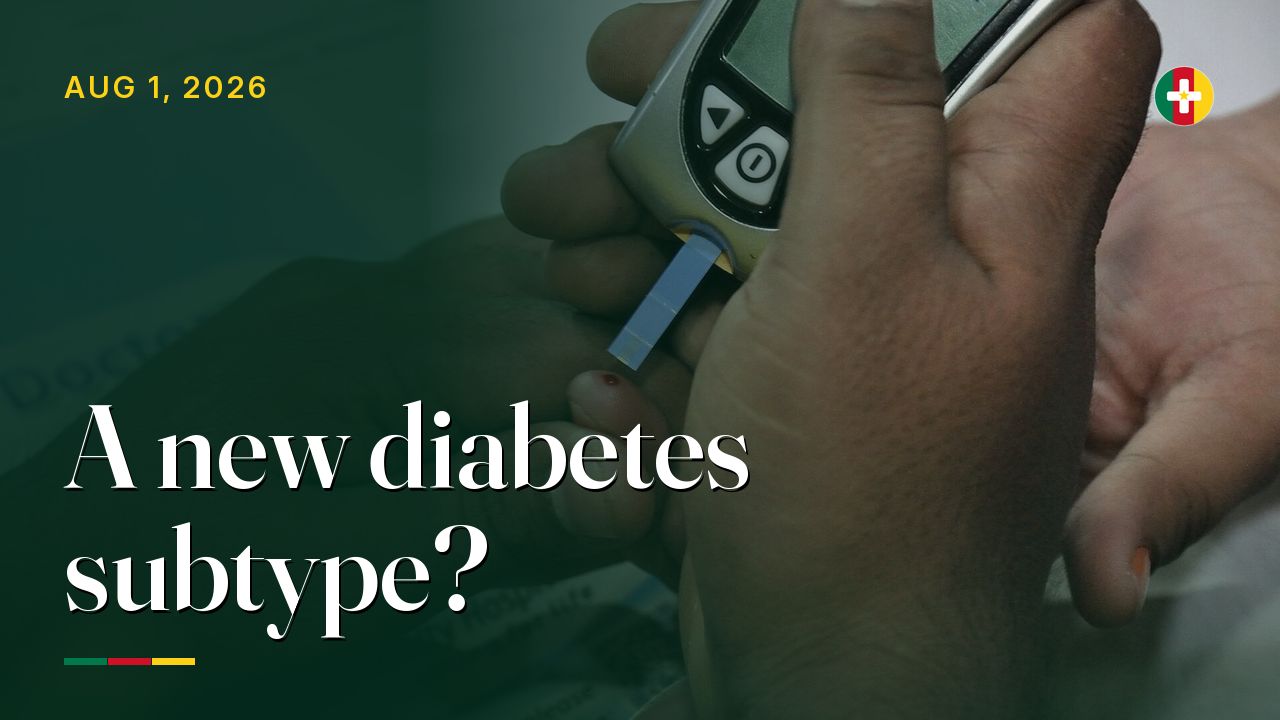
This brief draws on a session of the Cameroon Town Hall for Healthcare Professionals held on August 1, 2026. Dr. Jean Claude Njabou Katte presented results of the YODA study showing that most young Cameroonians and other Africans diagnosed with type 1 diabetes lack the autoimmune and genetic markers of type 1 disease, suggesting a distinct, non-autoimmune, insulin-deficient form of diabetes.
Context
Young people with type 1 diabetes in Cameroon die at rates far above those in high-income countries (about 33 per 1,000 in a published Cameroonian analysis, as stated), with hypoglycaemia a leading cause in African cohorts. In the YODA study most young people with clinically diagnosed type 1 diabetes were islet-autoantibody negative, including 61% of those diagnosed within a year, and their genetic profile differed from classic type 1 (study data). Antibody thresholds in Africans differ from manufacturer thresholds. Antibody tests and monogenic testing are not routinely available, and insulin analogues are only now becoming available through donor programmes.
Key issues
- Misclassification. A clinical label of type 1 diabetes may cover several diseases, including monogenic forms that respond to tablets.
- Imported reference values. Antibody and other laboratory thresholds from European populations misclassify African patients.
- High mortality. Young people with diabetes die from hypoglycaemia and limited access to care.
- Unknown cause. The cause of non-autoimmune insulin-deficient diabetes is not known; infections, drugs and environmental exposures are candidates.
- Limited access to technology. Analogue insulins, glucose monitoring and genetic testing remain scarce.
Discussion highlights
- Dr. Katte: if you can afford only one antibody test in Africa, use GAD.
- Dr. Katte: one girl with HNF1A diabetes moved from insulin injections to tablets after genetic diagnosis.
- Dr. Foma: reference values must come from our own populations.
- Dr. Katte: research matters only if it stops children dying of diabetes.
Recommendations
- Protect young people living with diabetes. MINSANTE, with the National Diabetes Programme and partners, should guarantee free insulin, glucose meters and strips, and hypoglycaemia education for every child and young adult with diabetes, and record deaths and their causes in paediatric diabetes clinics.
- Use African reference thresholds. Laboratories and researchers should adopt African-derived thresholds for islet autoantibodies and validate other reference ranges in Cameroonian populations, with support from the National Public Health Laboratory and universities.
- Offer targeted diagnostic testing. Referral diabetes clinics should introduce GAD antibody testing and C-peptide for young people with new diabetes and refer antibody-negative patients with preserved C-peptide for monogenic testing through research partnerships.
- Support the PANDA cohort and data sharing. MINSANTE and the University of Yaoundé I should support recruitment to PANDA in all regions, ethical frameworks for pancreatic tissue donation, and an open data resource, so that causes and prevention can be identified.
- Build domestic funding for research. Government and private sector leaders in Cameroon should fund diabetes research and reference range studies, with tax incentives for donations.
Next steps
The town hall will follow the PANDA study and invite Dr. Katte to report results, and will hold its next session on autism.
Conclusion
The YODA findings suggest that many young Africans labelled with type 1 diabetes have a different disease. Getting the diagnosis right, using African reference values and keeping these children alive are the immediate priorities while research looks for the cause.
Meeting minutes
Agenda
- Welcome and introduction by the moderator, Elvis Ndansi
- Presentation by Dr. Jean Claude Njabou Katte
- Reactions from the moderators and the Chair
- Questions and answers moderated by Dr. Tegomoh
- Announcements and closing remarks
Opening remarks
- Elvis Ndansi said diabetes is a major chronic disease in Cameroon and that emerging Cameroonian evidence points to a new subtype affecting young people, with implications for diagnosis, treatment, research and policy. He invited Dr. Katte, one of the town hall's moderators, to present.
Presentation
1. The research team and the path to the question
Dr. Katte works within an NIHR-funded group set up in 2018 with the University of Exeter and partners across Africa, led in Yaoundé by Prof. Eugene Sobngwi. His interest grew from work as a general practitioner in Bafoussam, where he diagnosed a 13-month-old with diabetes, and from his PhD on type 1 diabetes in sub-Saharan Africa. He shared the career development plan he drew up in 2023 as an example for early career researchers.
2. What we thought we knew
Type 1 diabetes is autoimmune destruction of the beta cells, marked in blood by islet autoantibodies (GAD, IA-2, ZnT8 and insulin), present in 90 to 95% of white European children and appearing years before clinical onset. Earlier African studies suggested a later peak age, lower antibody rates and sometimes preserved insulin secretion. His review argued that high mortality may mean clinics see only children who survive, a survival bias that could hide a different disease.
3. The YODA study
The Young Onset Diabetes in sub-Saharan Africa study recruited young people with clinically diagnosed type 1 diabetes in Cameroon (Yaoundé Central Hospital and Bafoussam), Uganda and South Africa, later with Tanzania. It measured islet autoantibodies against African-derived thresholds, stimulated C-peptide and a 67-SNP type 1 diabetes genetic risk score. Thresholds derived from Ugandan data differed from UK and manufacturer thresholds, which would overestimate antibody positivity in Africans.
4. Most young Africans with 'type 1' are antibody negative
Most participants had none of the three antibodies; even among those diagnosed within a year, 61% were antibody negative, and multiple antibodies were rare (8.5% overall). GAD was the most common antibody, so if only one test is affordable, GAD is the one to use. Antibody-positive participants had classic type 1 features: onset around 14 years, low BMI, severe insulin deficiency in about 80%, and high genetic risk.
5. A different disease in the antibody-negative group
Antibody-negative participants looked clinically the same (onset around 15 years, lean) and over 60% were insulin deficient, but their type 1 genetic risk was much lower, their frequency of the HLA DR3 and DR4 risk types was similar to people without diabetes, and their type 2 genetic risk was not raised. In the US SEARCH for Diabetes in Youth study, about 84% of newly diagnosed Black children and 90% of white children were antibody positive; antibody-negative Black children, but not white children, also had low type 1 genetic risk. The findings were published in a Lancet journal in 2025 with an accompanying editorial.
6. Ruling out other explanations
Next-generation sequencing of 57 monogenic diabetes genes in selected Cameroonian participants found five monogenic cases (HNF1A, HNF1B, insulin gene, a mitochondrial variant and an HNF4A variant not reported before that needs functional study) and no GCK cases; one girl with HNF1A was switched from insulin injections to glimepiride. Islet cell antibody testing in Bristol and tetraspanin-7 testing (17.6% positive among antibody-negative cases, using a European threshold) did not explain most cases. He concluded the condition is not typical type 1, type 2, ketosis-prone, monogenic or malnutrition-related diabetes and called it, for now, non-autoimmune insulin-deficient diabetes.
7. Next steps: the PANDA study
With a Wellcome Trust fellowship, he has set up the PANDA study to recruit newly diagnosed young people in Cameroon prospectively for deep phenotyping, follow-up of beta cell function, pancreatic MRI and mixed meal tests of endocrine and exocrine function, with the aim of an open data resource. Collaborations with Bristol and UCSF (including antibody discovery by phage immunoprecipitation sequencing), early detection using biobanked samples, and work towards pancreatic organ donation in Africa are under way.
Discussion and Q&A
- Reactions from the moderators and Chair. Dr. Tegomoh said he had never heard of such a form of diabetes. Dr. Foma said the work shows the danger of using reference values derived from white populations and the need for African studies, noting that many Africans referred to him with low white cell counts are normal by appropriate standards.
- Dr. Franklin Maloba: could epigenetic changes, diets rich in starchy staples, or early infections such as malaria explain these cases? Dr. Katte said epigenetic changes are linked mainly to type 2 diabetes and are unlikely to cause such severe beta cell failure, though an epigenetic screen could reveal exposures. High-carbohydrate diets point to obesity-related type 2 diabetes, not insulin deficiency. Infection is plausible: Prof. Sobngwi's work showed human herpesvirus 8 can infect beta cells, and early TB, HIV, or drugs (antimalarials, anti-TB) need study; PANDA will examine these exposures. Large epigenetic or genome-wide studies need about 2,000 cases, and he is building numbers through PANDA and a planned 500-case study with UCSF and Rwanda. Dr. Foma added that enteroviruses, rubella, mumps, CMV and EBV have been linked to type 1 diabetes.
- Dr. Foma: does this change prevention and treatment, and do newer drugs such as GLP-1 agonists work in this group? Dr. Katte said both groups need insulin now, but if the process also damages alpha cells, children may not recover from insulin-induced hypoglycaemia, which a cohort analysis found to be the main cause of death; exocrine involvement would call for enzyme replacement. An identified exposure or infection could lead to primary prevention, even vaccination. There are no African data on newer agents, and these lean children should not be made leaner; a Yaoundé trial is testing the best therapy for lean adults with type 2 diabetes. He noted that Cameroon is only now getting insulin analogues through the Changing Diabetes in Children programme while pumps and closed loops are used elsewhere. Dr. Foma described immunotherapy, stem cell and gene therapy research in diabetes.
- Chat questions on the phenotype in Asia and on African reference ranges. Dr. Katte said an Indian study found antibody-negative children genetically similar to antibody-positive ones, and that the GAD positivity threshold appears much lower in India than in Africa or Europe. He hypothesised an interaction between an environmental exposure and beta cell susceptibility genes outside the HLA region. There is no barrier to African reference ranges except doing the studies. A clinical laboratory director suggested working with laboratories serving Black and brown patients to build reference data faster.
- Dr. Tegomoh: could this lead to a new classification of diabetes? Dr. Katte said classifications have changed before and monogenic diabetes did not exist in textbooks until its genes were found, so a distinct entity could be recognised if confirmed.
- A nutrition researcher asked what inspired the work. Dr. Katte said he was fascinated by endocrinology from Prof. Sobngwi's lectures, and that he lost his father to diabetes when he was about two. Cameroonian data show young people with type 1 diabetes dying at about 33 per 1,000, and his goal is an Africa where no child dies of diabetes.
- Prof. Joshua Tambe: is radiation exposure associated with diabetes? Dr. Katte said he knew of evidence on environmental toxins and endocrine disruptors, mostly linked to insulin resistance, and of a colleague studying mining exposures in the Congo. Dr. Foma said survivors of childhood cancer treated with radiation show increased diabetes risk, with mechanisms that may include beta cell damage, inflammation and pancreatic fibrosis.
- Dr. Tegomoh: with unlimited resources, what single study would move the work forward? A prospective PANDA-type cohort in Cameroon, Uganda, Senegal, South Africa and Ethiopia, about 5,000 cases and 7,000 to 10,000 controls, with whole genome sequencing, exposome data and pancreatic tissue, which he estimated at about US$100 million.
Calls to action and closing
- Dr. Foma said treatment should move beyond HbA1c and glucose to the type of diabetes a patient has, and urged African business leaders to fund research. He announced that the next session was expected to address autism.
- Elvis Ndansi reported that pledges made at the previous session for the CAMESA students' project in the South West region had been paid, totalling over 7 million FCFA, including 5 million from the Minister of Public Health and 1 million from the town hall moderators, alongside an ECG machine.
- Dr. Katte thanked the town hall, recognised two young Cameroonian doctors working with him on PANDA, and said research matters only if it changes how patients are treated.
Next meeting
In about a month, on autism (date not announced in the session).
Submitted by the Co-Moderators, Cameroon Town Hall for Healthcare Professionals.