Policy Briefing: Health Care in Conflict Zones, Lessons from Bamenda Regional Hospital
Overview
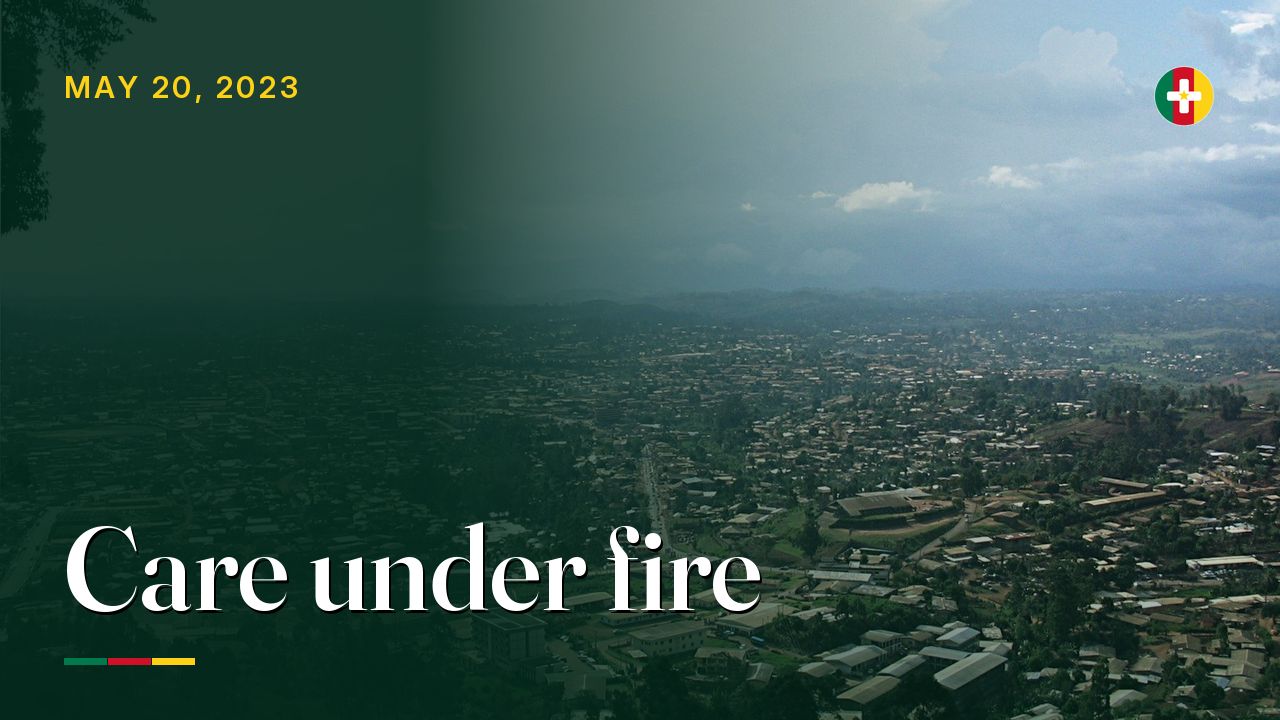
This policy briefing synthesizes key insights from the Cameroon Townhall for Healthcare Professionals meeting held on May 20, 2023, focusing on the theme “Health Care in Conflict Zones: Bamenda Regional Hospital,” presented by Dr. Denis Nsame Nforniwe, Director of Bamenda Regional Hospital.
Context
Bamenda Regional Hospital serves more than 2 million people in the North West Region, where the armed conflict since 2016 has displaced people, threatened staff, and brought gunshot injuries, trauma and gender-based violence. COVID-19 added to the strain. The hospital kept operating through performance-based financing, local recruitment and community support, while carrying large unpaid bills.
Key issues
- Staff shortages and safety. Only 156 of 519 staff are state employed. Transferred staff often do not report, and staff face kidnapping, threats and lockdown days.
- Unpaid bills. 82 million FCFA in performance-based financing remained unpaid when the World Bank programme ended, and care for poor and vulnerable patients left over 58 million FCFA unpaid in 2022.
- Conflict-related burden. Gunshot wounds were a leading cause of death, with 171 gender-based violence cases and 271 mental health cases in one quarter.
- Gaps in services. There is no peritoneal or paediatric dialysis supply, no strong hepatitis programme, limited oncology, and an unreliable power supply.
- UHC implementation. Dialysis session fees were removed, but patients still pay for workups, blood and vascular access, and payment routes for hospital claims were not yet defined.
Discussion highlights
- Neutrality in treating all patients has protected staff and the hospital.
- Transparent reporting of activity and finances built trust with donors and families.
- Diaspora specialists can support case discussions, training and equipment.
- Decentralisation to the Regional Assembly may allow performance-based staffing.
- Sepsis and antibiotic misuse need hospital-level stewardship.
Recommendations
- Settle arrears and protect cash flow. MINSANTE and partners should pay the 82 million FCFA in outstanding PBF subsidies and set up a fund to reimburse care given to poor and vulnerable patients. First step: a reconciliation of unpaid claims for regional hospitals in the North West and South West.
- Staff hospitals in conflict regions. MINSANTE and the Regional Assembly should allow regional hospitals to recruit directly for posts in conflict regions, with hardship allowances and safe staff transport, and track whether transferred staff report. First step: publish vacancies for general practitioners and specialised nurses at Bamenda Regional Hospital.
- Complete kidney care under UHC. MINSANTE should extend UHC cover to dialysis workups, blood and vascular access, and add paediatric haemodialysis and peritoneal dialysis kits to supply contracts. First step: clarify how dialysis claims from regional hospitals are paid.
- Strengthen trauma, mental health and GBV services. Regional delegations, the hospital and partners such as Doctors of the World should build a full mental health clinic, keep GBV hotlines and legal support, and complete the planned emergency centre. First step: confirm FEICOM funding and a timeline for the emergency centre.
- Start hepatitis B and antibiotic stewardship programmes. MINSANTE should set up a national hepatitis B programme with subsidised testing and tenofovir, building on registries such as Bamenda's, and support hospital antibiotic stewardship committees. First step: a monthly linkage-to-care register shared with the regional delegation.
- Channel diaspora support. Diaspora associations and the Town Hall should adopt costed hospital projects (solar power, laboratory, outpatient department) and set up a roster of specialists for remote case discussion. First step: circulate the hospital's project list to Town Hall members.
Next steps
Participants offered support on critical care, hepatitis B and diagnostics. The next session was set for two weeks later on dialysis and the role of NGOs.
Conclusion
Bamenda Regional Hospital showed that a public hospital can keep working and improving during conflict through strong leadership, neutrality and transparency. Paying arrears, staffing, and completing UHC and specialist services would let it serve its population better.
Meeting minutes
Agenda
- Welcome and National Day greetings by the Chair, Dr. Munoh Kenne Foma
- Remarks by co-moderator Dr. Bryan Tegomoh
- Introduction of the guest speaker
- Presentation by Dr. Denis Nsame Nforniwe on Bamenda Regional Hospital
- Reflections by moderators and participants
- Discussion and Q&A
- Closing remarks and next meeting
- Parking lot discussion
Opening remarks
- The Chair opened the session on May 20, Cameroon's National Day, with a prayer for peace, unity and progress, and thanked the speaker for joining instead of attending the celebrations in Bamenda.
- He noted that Bamenda Regional Hospital had been named best hospital in Cameroon several times despite operating in a conflict zone, and recalled that Bamenda was his own first posting as a junior doctor.
- Dr. Bryan Tegomoh said healthcare in conflict zones is rarely discussed and asked how the hospital kept clinical care and public health work such as vaccination going during the crisis and COVID-19.
- The Chair recalled his own collaboration with the hospital during COVID-19 and invited diaspora professionals to look for ways to support hospitals at home.
Presentation
1. The hospital and its staff
Bamenda Regional Hospital began functioning on April 5, 1956, and is the referral and teaching hospital for the North West, serving more than 2 million people with 400 beds in 31 buildings. It has 519 staff: 156 employed by the state and 363 recruited locally or through partners, about 101 of them in the HIV programme. Of about 50 doctors, 17 are general practitioners (only 6 state employed) and there are 11 surgeons, 2 neurosurgeons (one on site), 2 paediatricians, 2 gynaecologists and 2 radiologists.
2. Activity through the crisis
New consultations peaked in 2018 and fell with the conflict until 2020, when activity began to recover. Deliveries fell from 2016 as people left the region and have risen slightly since 2020. Blood requests approach 5,000 a year and the hospital meets about three quarters of them while also supplying other facilities. Laparoscopic surgery began in 2019, laparoscopic urology in 2023, and operating rooms were expanded from two to four. Bed occupancy in 2022 was 70.1% with an average stay of five days.
3. Disease burden
By April 25, 2023 the hospital had screened over 16,500 people for COVID-19 with about 2,000 positive across five waves, and given over 8,500 vaccine doses. It follows about 5,300 people living with HIV (over 450 children), recorded 130 TB cases and 3,414 malaria cases in 2022, 9 maternal deaths (8 audited) and 69 perinatal deaths. The hepatitis clinic found 295 positive cases (9.2% of those screened), with 75 on treatment. Leading causes of death were sepsis, gunshot wounds and kidney failure.
4. Effects of the conflict
In the first quarter of 2023 a basic mental health clinic saw 271 cases, including 71 of post-traumatic stress disorder, and the hospital received 171 cases of gender-based violence, including 34 rapes. In 2022 it received 162 gunshot cases at emergency and 89 bodies with gunshot wounds at the mortuary, and in the first quarter of 2023 another 40 and 20. Bullets have struck the director's residence, the dialysis unit and the postnatal ward, and staff have faced kidnappings and phone threats.
5. Financing and unpaid bills
Since 2017 the hospital has worked under performance-based financing, receiving 473 million FCFA in subsidies, but 82 million FCFA was still unpaid when the World Bank programme ended on December 31, 2022. The hospital treats poor and vulnerable patients first and bills later: 12,564 such patients in 2022 left more than 58 million FCFA unpaid, which reduces drug stocks. Revenue rose after the Ministry replaced the broken CT scanner, inaugurated by the Minister of Public Health in February 2022. The hospital spends about 15 million FCFA each month on stipends for locally recruited staff.
6. Improvements and partners
Recent works included a renovated ICU, a 25-room isolation and solidarity ward, renovated neonatal, postnatal and infant welfare units, an extended mortuary, a new blood bank, a full blood count analyser, public toilets, a WHO-funded incinerator and a locally funded medicalised ambulance. The Ministry supplied eight new dialysis machines in early 2021 for a cohort of about 80 patients, and has donated a mammography unit and a dental panoramic X-ray. The city mayor donated a 200 KVA generator, diaspora groups donated beds, and families have funded staff prizes and patient bills.
7. Universal Health Coverage and decentralisation
Under the first phase of Universal Health Coverage launched in March 2023, dialysis patients no longer pay the 5,000 FCFA session fee, although the speaker said the true cost per session is about 110,000 FCFA and patients still pay for workups, blood, catheters and fistulas. Free under-five consultations apply only to district hospitals and health centres. Regional and district hospitals are to come under the Regional Assembly, and the speaker hoped this would allow the hospital to hire and dismiss staff based on performance.
8. Needs
The hospital estimated about 257 million FCFA for infrastructure (outpatient department, labour room and antenatal unit, surgical ward, private rooms, laboratory, kitchen and laundry, pharmacy store, perimeter fence) and about 956 million FCFA for equipment, of which about 670 million is for solar power for the whole hospital. A modern emergency centre of over 500 million FCFA was planned with FEICOM funding, and the hospital needs a four-wheel drive ambulance.
Discussion and Q&A
- Dr. Katte Jean-Claude asked whether the number of general practitioners was enough and how the hospital attracts staff. The speaker said staffing is the biggest challenge: a 400-bed hospital cannot run on 156 state staff, so he recruits locally and reviews contracts each year, having let 11 staff and one doctor go for poor performance. House officers were placed so each ward has a permanent doctor. Many staff transferred to Bamenda never reported, often from fear. On 'ghost town' Mondays the hospital uses its ambulances to bring staff to work.
- Iya Bekondo-Granatella asked whether peritoneal dialysis is now offered in Bamenda and whether dialysis is free under UHC. Only haemodialysis is offered; the national supply contract covers haemodialysis kits only, and peritoneal dialysis is done at Mbingo Baptist Hospital. For a child with acute kidney failure linked to a contaminated cough syrup bought in Douala, the paediatrician and surgeons improvised peritoneal dialysis, but two children died. Under UHC only the 5,000 FCFA session fee has been removed so far.
- A critical care clinician in the diaspora asked whether a temporary haemodialysis catheter could be used for children instead of peritoneal dialysis, and offered to help. The speaker said he would take this up with the head of the dialysis unit, since paediatric kits are not supplied under the contract.
- The Chair asked what human resources the diaspora could help with. The speaker named general practitioners and specialised nurses (anaesthesia, intensive care, oncology, dialysis) as the main needs. Many specialists come from Yaoundé or Douala part time, and the region has a single neurosurgeon on site. The hospital refers cancer treatment to Yaoundé, Douala and Mbingo. He welcomed case discussions with diaspora specialists.
- Gilbert, who runs a UK-based organisation working on school health and hepatitis B in Cameroon, asked how positive hepatitis cases are linked to care and where collaboration could help. The speaker said there is no strong national hepatitis programme. The hospital opened a registry, records contacts from the first positive test, and reviews files in a monthly committee, with plans to delegate tasks to nurses as was done for HIV. Patients are lost when workup costs are high. He said hepatitis C treatment had been cut from 50,000 to 25,000 FCFA a month.
- Dr. Joshua Tambe asked how first-phase UHC costs would be covered and whether the hospital bears any of the burden. The speaker said the ten regional funds for health promotion act as payers, with the regional delegate's team validating claims, and are meant to pay hospitals monthly. Dialysis bills go to the Ministry, and how they will be paid was not yet clear.
Calls to action and closing
- Participants who had worked with the speaker, including a former HIV project manager and Dr. Tambe, described his practice of neutrality: treating every patient without asking who they are or where they come from.
- The speaker announced plans for an antibiotic stewardship committee because of concern over sepsis and resistance, and said hepatitis B prevalence above 10% calls for action.
- Elvis Ndansi said the recording would be shared with the Town Hall's 1,750 members in 35 countries and suggested diaspora associations raise funds for equipment donations through groups such as MedShare.
- The Chair praised the transparency of the financial figures and listed sepsis, gun violence, mental health and gender-based violence as issues for future sessions. He asked why cardiovascular disease did not appear among the leading causes of death and whether it is underdiagnosed.
- The next session, in two weeks, was announced on dialysis in Cameroon and the role of private sector and NGOs.
Next meeting
In two weeks (June 3, 2023), on dialysis in Cameroon and the role of NGOs.
Submitted by the Co-Moderators, Cameroon Town Hall for Healthcare Professionals.