Policy Briefing: Lessons from Cancer Care at Mbingo Baptist Hospital
Overview
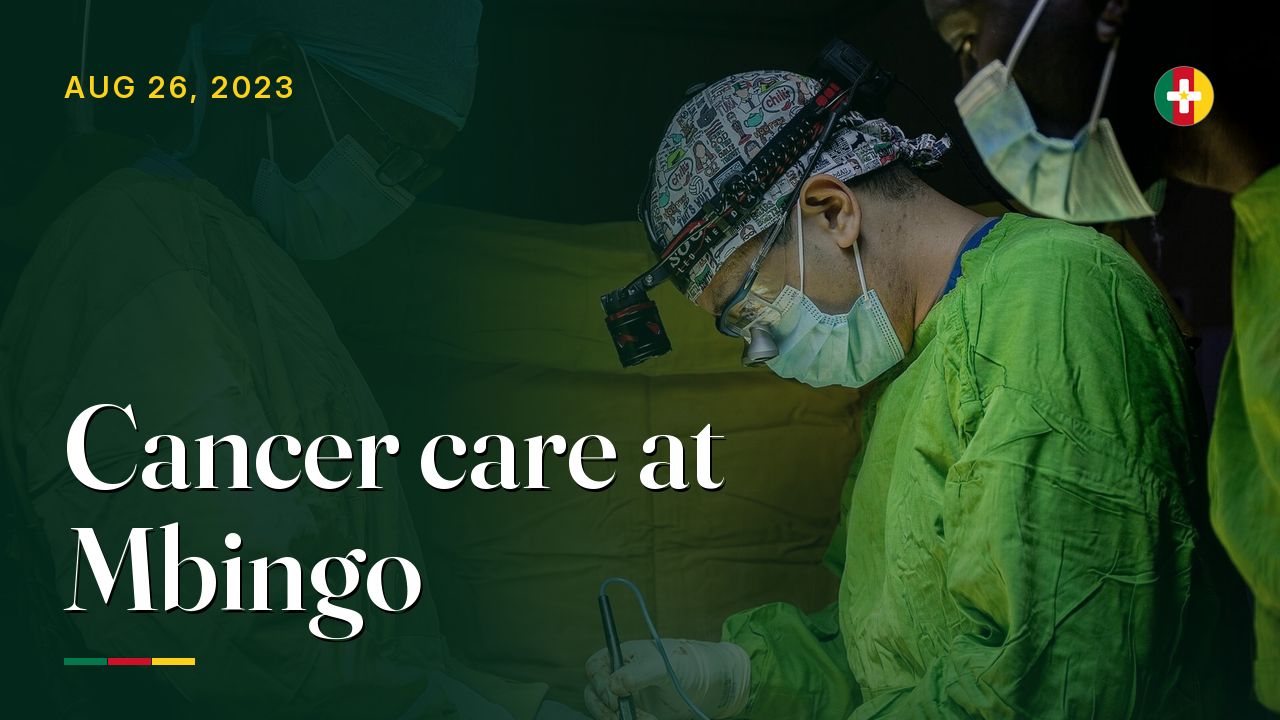
This policy briefing synthesizes key insights from the Cameroon Townhall for Healthcare Professionals meeting held on August 26, 2023 (82nd edition), focusing on the theme “Treating Cancer in Cameroon: The Mbingo Baptist Hospital Experience,” presented by Dr. Francine Kouya and her team.
Context
Most cancer patients in Cameroon pay for scans, drugs and surgery themselves and arrive at an advanced stage. Radiotherapy is concentrated in Douala and Yaoundé, far from patients in the North West. Mbingo Baptist Hospital runs one of the few comprehensive cancer programmes in the country, with paediatric and adult oncology, pharmacy, pathology, palliative care, survivorship follow-up and a hospital-based registry.
Key issues
- Cost and abandonment. Without insurance, families struggle with transport, food and follow-up, and many abandon treatment. Mbingo pays transport, provides welcome packages and a parents' home to keep children in care.
- Radiotherapy access. Patients referred from the North West to Douala often never reach radiotherapy. Mbingo is building a radiotherapy bunker that needs further funding.
- Diagnosis. Staging is often unaffordable (about 100,000 FCFA for a CT), image-guided biopsy is limited, and immunohistochemistry is not available locally.
- Data. Cameroon has one population-based registry, in Yaoundé. Mbingo's hospital-based registry (Resonance and CanReg5) could feed a national system but lacks dedicated staff and follow-up.
- Drug access and quality. Medicines are expensive and their quality on the open market is uncertain, which affects outcomes.
Discussion highlights
- Teamwork, palliative care, survivorship follow-up and family support make cancer care possible even with limited resources.
- Work with parents and traditional healers improved early referral of children.
- Participants proposed asking MINSANTE to support cancer treatment as it does HIV and tuberculosis.
- Sustainability was raised repeatedly as the main risk for the programme.
- Partners such as RAD-AID and CHAI offered concrete routes for training and cheaper medicines.
Recommendations
- Bring cancer into public financing. MINSANTE should study support for cancer treatment along the lines of the HIV and tuberculosis programmes, starting with childhood cancers. First step: the town hall and the diaspora health committee send the Minister a letter with costed proposals.
- Complete radiotherapy in the North West. MINSANTE, CBC Health Services and partners should fund and staff the Mbingo radiotherapy bunker. First step: a funding roundtable with diaspora organisations and partners such as RAD-AID.
- Strengthen diagnosis. Hospitals and partners should train radiologists in image-guided biopsy and equip pathology for immunohistochemistry in the North West. First step: diaspora interventional radiologists organise visiting training at Mbingo.
- Build on hospital-based registries. MINSANTE and the National Cancer Control Committee should fund data managers and link hospital registries such as Mbingo's to a national system. First step: agree common CanReg5 fields with the Yaoundé registry.
- Secure affordable, quality medicines. MINSANTE should complete the revolving fund for discounted cancer medicines negotiated by CHAI, and hospitals should buy directly from approved manufacturers meanwhile. First step: Mbingo contacts CHAI Cameroon.
- Support families and fundraising. The Ministry of Territorial Administration should allow approved public appeals for cancer care, and the diaspora should fund transport, food and caregiver support. First step: a pilot media appeal for the Mbingo programme.
Next steps
Town hall leaders were to follow up with the Mbingo team on a priority list of needs. RAD-AID and other partners offered to work directly with the team. The next session was set for two weeks later.
Conclusion
Mbingo shows that organised, humane cancer care is possible in Cameroon. Keeping it going needs public financing, radiotherapy close to patients, better diagnosis and steady partnerships.
Meeting minutes
Agenda
- Welcome by the Chair, Dr. Munoh Kenne Foma, and the moderator, Dr. Katte Jean-Claude
- Remarks by Elvis Ndansi
- Presentation by Dr. Francine Kouya on cancer care at Mbingo Baptist Hospital
- Presentations by the Mbingo team: oncology pharmacy, the hospital-based cancer registry, and imaging
- Reflections from participants
- Discussion and Q&A, including the paediatric surgeon and the team's priority needs
- Closing remarks and adjournment
Opening remarks
- The Chair, a medical oncologist, said a cancer diagnosis in Africa is still a taboo that people equate with death, and that Mbingo Baptist Hospital had built a multidisciplinary team of physicians, specialist pharmacists, social workers and nurses that the diaspora could support.
- He introduced Dr. Francine Kouya as an internist trained in oncology at Stellenbosch University in South Africa, who had presented at ASCO and ESMO on cancer care in low resource settings.
- Dr. Katte Jean-Claude, moderating, welcomed participants and noted the session was short of moderators. For first-time participants, the Chair explained that the town hall was created almost three years earlier to connect professionals at home and in the diaspora, that the Minister of Public Health had attended several times, and that the town hall was working with the Ministry on diaspora engagement.
- The presentation started late because of network problems in Mbingo after heavy rain.
Presentation
1. History of cancer care at Mbingo
Dr. Kouya said Mbingo Baptist Hospital, a former leprosy settlement, is the largest of six hospitals run by the Cameroon Baptist Convention Health Services, whose mission statement calls for exemplary care for all in a country with no health insurance. Cancer work began in 2003 with a childhood cancer programme supported by Stellenbosch University. Cervical and breast cancer screening started in 2007 within the women's health programme, a pathologist joined in 2010, and the adult oncology unit was established in 2017. The team now includes two paediatric surgeons, two pathologists (the second arrived two weeks earlier), a radiation oncologist finishing training at Stellenbosch and due back in December, and a paediatric oncologist completing training in India.
2. Patient stories
She presented patients treated with chemotherapy, surgery and, where possible, radiotherapy: an adolescent with a large facial tumour who was a six-year survivor, an 18-year-old with a shoulder sarcoma who regained quality of life after neoadjuvant chemotherapy and amputation, and a child with a large retroperitoneal sarcoma whose kidney function recovered after a urinary diversion by the paediatric surgeon and who lived three more years. Her point was that cancer can be cured even with limited resources, and that where it cannot, patients and families can be spared dying in misery.
3. Support that keeps patients in treatment
The paediatric unit has 10 beds and two isolation rooms, with a play therapist and a parents' home for families during treatment. Because families have no health insurance, the programme gives a welcome package and some money on admission, pays transport for follow-up visits, and supports nutrition for children who may stay three months. Dr. Kouya said that chemotherapy and trained staff are not enough without this support.
4. Survivorship, palliative care and outreach
The team follows survivors in their villages: of 96 former patients traced in 2013, 33 percent were alive, and later follow-up continued in 2014 and 2017. Dr. Kouya showed herself travelling by motorbike to check on a child treated for bilateral retinoblastoma. A trained palliative care nurse visits patients at home, supports families with morphine and its side effects, and the team trains primary health care workers in early warning signs. The adult unit sees about seven new consultations a day, and the women's health programme screened about 50,000 women between 2007 and 2014, the largest cervical screening programme in Cameroon. The team works with the National Cancer Control Committee and has lobbied the Ministry of Health on childhood cancer.
5. Oncology pharmacy and research
The clinical pharmacist described safe compounding of cytotoxic drugs in a type 2 biosafety cabinet, protective equipment for the four routes of exposure, and standard operating procedures from the International Society of Oncology Pharmacy Practitioners. He said the hospital needs a two-chamber incinerator for cytotoxic waste, planned in the new cancer centre. Pharmacists also review doses, drug interactions and other medicines for patients with diabetes, hypertension and other conditions. Mbingo takes part in the Wilms Tumour Africa phase 2 project (a SIOP protocol in 10 African cities), a supportive care project aiming to cut deaths during treatment below 10 percent, a study aiming for zero treatment abandonment, and a study starting in September on early warning signs of childhood cancer.
6. The hospital-based cancer registry
Brian Jato, a nurse, said the registry aims to produce valid, reliable data on diagnosis, treatment and long-term outcomes for all patients with cancer. Childhood cancer records moved from paper booklets (2003 to 2008) to the POND database developed by St. Jude Children's Research Hospital (2008 to 2015), then to the Resonance system from 2016, which covers children and adults across Mbingo and satellite CBC hospitals including Banso and Mboppi Baptist Hospital in Douala. Adult data have used CanReg5 since 2018, on the advice of the African Cancer Registry Network, so the data can be compared with other countries. Challenges include missing data, little dedicated time for data managers, limited training and poor long-term follow-up. Cameroon had only one population-based registry, in Yaoundé, and he said resources are needed to move toward population-based registration.
7. Imaging
The radiologist said most patients arrive late and many cannot afford staging. A thoraco-abdominal CT costs about 100,000 FCFA, so chest X-ray and ultrasound are often used instead. Tumours in the lung, retroperitoneum and kidney are hard to biopsy without image-guided procedures, which the team does not yet perform routinely. Images are shared with partners abroad in multidisciplinary meetings to plan difficult cases.
Discussion and Q&A
- A clinician working in Cameroon proposed that the town hall write to the Minister asking that cancer treatment be supported like HIV and tuberculosis, since very few families can pay for it. Elvis Ndansi said the Minister's diaspora health committee, whose members include Dr. Samuel Ndinjiakat, could carry the idea to the Ministry. He proposed that Mbingo seek approval from the Ministry of Territorial Administration for public fundraising and said town hall members could cover CRTV airtime for short appeals with patient stories, with donations by mobile money.
- How is the programme funded, and can it raise more? Dr. Kouya said the hospital already has a fundraising committee and is working with St. Jude to learn its methods.
- The paediatric surgeon was invited to speak. He said that drugs and surgery are often available but families cannot pay, and that delayed surgery after chemotherapy undermines cure for children with Wilms tumour. He said he does not refuse a child surgery for lack of money. His main concern was sustainability, and he suggested approaching large companies such as MTN and Orange.
- A physician in Houston who had worked at Banso Baptist Hospital, described the social impact of the programme. He said treated families learned that a child's tumour was a disease, not a curse, and referred other children. Dr. Kouya added that about 80 percent of parents became advocates, and that a study with traditional healers led to about 90 percent of children with tumours being referred by healers, about 80 percent of whom had a malignancy.
- The Chair asked the Mbingo team to set priorities for diaspora support: people, money, volunteers or equipment. Dr. Kouya said radiotherapy comes first: patients from the North West sent to Douala for radiotherapy often never go, so the hospital is building a radiotherapy bunker, which is under construction and needs much more funding. She also mentioned training and medicines. A CBC nurse added social needs: transport, food during admission and caregivers for children, some of whom are orphans. The radiologist asked for volunteers in basic interventional radiology and subspecialty support.
- How can partners in the United States help? The program director for RAD-AID in Cameroon said a large US cancer centre had expressed interest in helping Mbingo, and that his organisation can support training for radiographers, physicists and doctors as well as equipment and on-site support. He said radiography training in Buea had begun the previous month through contacts made at the town hall.
Calls to action and closing
- Dr. Samuel Ndinjiakat said the hospital-based registry could pave the way to a national registry and that the Ministry was building a platform to share work and diaspora offers.
- The pharmacist raised drug availability and quality, saying that some of the team's research results could not match those of other countries, which they attributed to the quality of medicines on the market.
- Elvis Ndansi noted that the Clinton Health Access Initiative, led in Cameroon by Dr. Yauba Saidu, had negotiated discounts of about 50 percent on some cancer medicines and that hospitals could buy directly at that price while a Ministry revolving fund was pending.
- The Chair summarised the needs: partnerships and volunteers, sustainability, tissue diagnosis through interventional radiology and stronger pathology including immunohistochemistry, radiotherapy, access to targeted therapy and immunotherapy, palliative care, and data.
- Dr. Kouya closed by saying that if the system is not fixed, everyone's family will eventually be its victim.
Next meeting
In two weeks (September 9, 2023).
Submitted by the Co-Moderators, Cameroon Town Hall for Healthcare Professionals.