The Giveback Project: Organising Diaspora and Local Contributions to Community Health in Cameroon
Overview
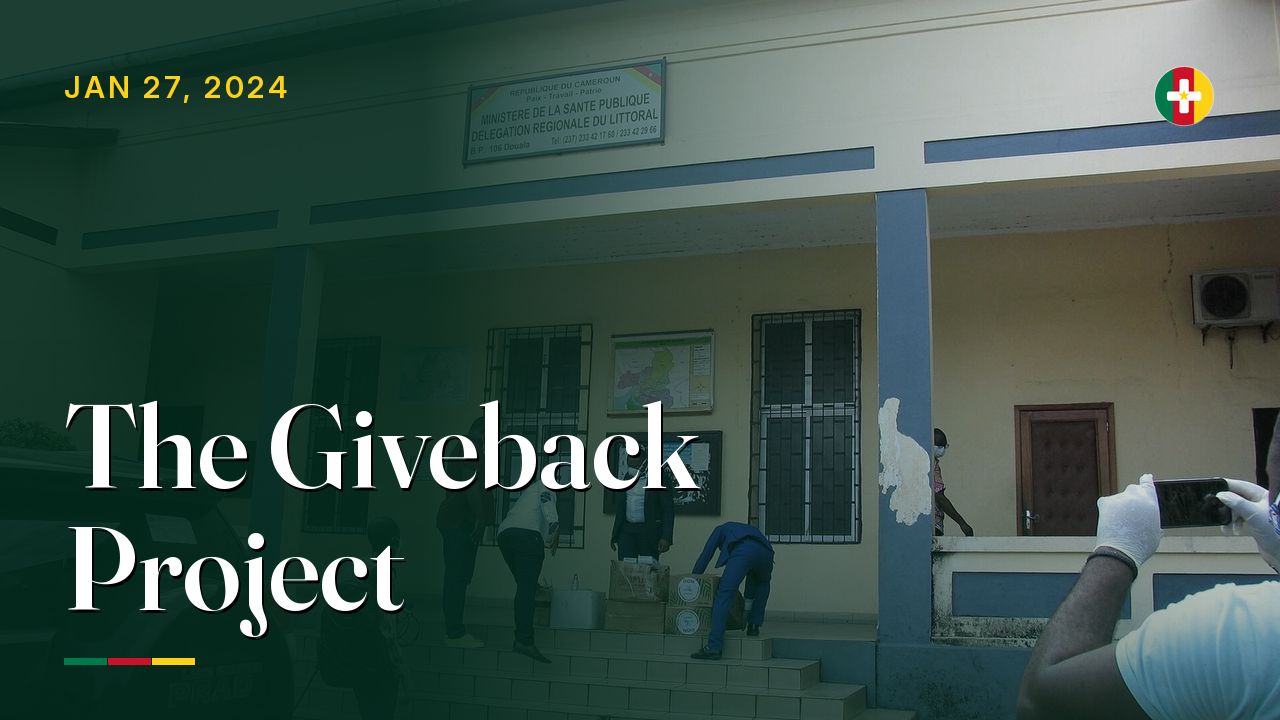
This policy briefing synthesizes key insights from the Cameroon Townhall for Healthcare Professionals meeting held on January 27, 2024, at which Elvis Ndansi presented the concept note for the Giveback Project and Dr. Bryan Tegomoh demonstrated its draft reporting platform.
Context
Many Cameroonian health professionals at home and abroad already support health facilities in their home communities, but efforts are scattered, hard to verify and often duplicated. The town hall, with about 2,350 members and a link to the Ministry of Public Health's diaspora committee, proposed a five-year programme (2024 to 2029) to organise and measure these contributions.
Key issues
- Scattered efforts. Diaspora contributions are many but uncoordinated, with no shared record of what was done, where, or at what cost.
- Accountability. Donors want traceability; communities need projects they own and can sustain.
- Practical barriers. Shipping supplies, import taxes and permissions to open facilities have slowed past efforts.
- Measuring impact. Without consistent reporting, the overall contribution of the diaspora to Cameroon's health system cannot be shown.
Discussion highlights
- Existing projects can be reported, and projects may be anywhere in Cameroon.
- Supporting students and research (for example reagents) counts as giving back.
- Members can share shipping capacity; a reported tax exemption on imported medical equipment was welcomed.
- Coordination should prevent duplication between nearby projects.
Recommendations
- Formalise the partnership with MINSANTE. MINSANTE, through its diaspora committee, and the town hall should agree in writing on the vetting process and on the Minister's recognition certificate. First step: a short memorandum naming focal points in each regional delegation.
- Set up regional vetting and local ownership. Regional delegations should help name one or two vetting volunteers per region, and every project should name a local contact and a health committee to monitor it.
- Publish templates and the platform. The town hall should release the needs assessment and proposal templates and move the reporting platform to its website, with an option for private reports. First step: test them with a few members' projects before wider launch.
- Clarify import rules for donations. MINSANTE and the Ministry of Finance should publish the current status of the tax exemption on imported medical equipment and supplies and a simple procedure for donors.
- Report impact each year. The town hall should publish an annual Giveback report (projects, places, beneficiaries, spending) and share it with MINSANTE and regional delegations to inform planning and avoid duplication.
Next steps
Templates and the reporting platform were to be finalised by the town hall's IT team, volunteers were invited to join the project, and members were encouraged to begin assessing needs in their communities.
Conclusion
The Giveback Project aims to turn the goodwill of Cameroonian health professionals into documented, verified and coordinated support for community health. Participants agreed that its value will depend on local ownership and consistent reporting.
Meeting minutes
Agenda
- Welcome and week's highlights in public health
- Update on the disrupted previous session
- Presentation of the Giveback Project concept note by Elvis Ndansi
- Demonstration of the draft project reporting platform by Dr. Bryan Tegomoh
- Comments by the Chair, Dr. Munoh Kenne Foma
- Discussion and Q&A
- Closing remarks
Opening remarks
- Dr. Tegomoh welcomed participants and noted low attendance because Cameroon was playing Nigeria in the Africa Cup of Nations that afternoon (23 participants against about 160 before the previous session was disrupted).
- Elvis Ndansi said the week's main news was Cameroon becoming one of the first countries to add the malaria vaccine to routine immunization, while anti-vaccine messages were spreading and health experts needed to communicate on the same channels. The Chair said Dr. Boghuma Titanji would speak on the vaccine at the town hall on February 24 and had already shared a short message in English and Pidgin.
- Dr. Samuel Ndinjiakat, back after his mother's death in Cameroon, said he had stopped everything to read about the malaria vaccine; the moderators offered condolences.
- Dr. Tegomoh announced that from 2024 every session would have minutes and a policy briefing, posted with the YouTube link on the town hall website then under development.
Presentation
1. Why a Giveback Project
Elvis Ndansi apologised for the previous session, which hackers had disrupted by taking over the slides, and said security gaps had been found and closed. He said that after almost three years of sessions, the town hall (about 2,350 members) wanted each member to do something significant for health in their village, meaning where they were born, grew up or identify with, between now and 2029. The project belongs to all members, at home and in the diaspora.
2. Needs assessment and proposal
Members will receive a simple needs assessment template to use with the village nurse, doctor or health committee, or they may assess needs informally. A short project proposal template will help them describe the project and approach friends, colleagues, employers, councils or associations for support. Members are encouraged to contribute first themselves, and the project team will provide fundraising materials and support.
3. Project categories
Projects can be infrastructure (building or renovating a health centre), capacity building (for example a midwife training village midwives in person or online, with time and costs counted), equipment donation, medical missions such as glaucoma or cataract screening, improving access for vulnerable groups, health education such as promoting vaccine uptake, and partnerships between diaspora and local stakeholders. Professionals working in Cameroon can take part by supporting their own village, and the village is a starting point, not a limit.
4. Implementation and monitoring
Projects should be planned and carried out with the local health centre and community leaders, who also monitor them. A local person should be named to follow progress and give feedback, and each report should state projected or immediate impact so the town hall can add up lives reached and money spent each year and over five years. Projects already under way can be reported.
5. Recognition and vetting
After a report is submitted, members can share an automatic summary on social media. A vetting committee of one or two people per region will call the local contact named in the report to confirm the work. Only then will the member receive a recognition certificate signed by the Minister of Public Health and the Chair of the town hall. Members may choose to keep their project private.
6. Timeline and coordination
The project launches in January 2024 and runs five years to 2029, with yearly impact reviews and a final analysis. It will be coordinated with the Ministry of Public Health's committee on cooperation with the diaspora, and volunteers are needed to run it. He said this could become a model for other countries' diasporas.
7. Draft reporting platform
Dr. Tegomoh demonstrated a draft form, then hosted on GitHub and to move to the town hall website, using the example of donating bed nets to Bali district. It records project name and category, village, a description of up to 250 words, number of beneficiaries, estimated cost, up to 10 photos, beneficiary institution and a local contact phone number, and the submitter's details, then shows a summary before submission. A downloadable PDF summary was planned. The website would also hold minutes, policy briefings, slides and recordings.
Discussion and Q&A
- Chair's comments Dr. Foma said members choose what to do and where (a village, a city, or a disease such as sickle cell, breast cancer or heart disease), while the town hall and the Ministry's diaspora committee help them get things done in Cameroon. He praised the speed with which the idea had been turned into a working tool.
- Dr. Ndinjiakat: comment and question on existing projects He said he had argued around 2010 on a diaspora email group that everyone should do something in their home area, which led to a foundation working with the Prime Minister's office and a hospital that now sees about 400 patients a month. He said having proposal guidance and ministry backing will save others the struggle he faced, and that coordination avoids duplication between nearby projects. His question on existing projects had been answered: they can be reported, including new contributions to them.
- A young scientist: how can he get reagents to a master's student in Cameroon who needs them for DNA extraction and sequencing before a September defence? Elvis Ndansi said supporting students counts as giving back and asked anyone able to help ship reagents to contact him. Dr. Ndinjiakat said his group had shipped a container three months earlier and could include items if told in advance, and reported that Cameroon had removed taxes on imported medical equipment (an exemption that had been due to expire on December 31, 2023). Dr. Tegomoh offered to connect him with the person in charge of research grants at the Ministry of Public Health.
- A professor, by chat He said the diaspora already gives back in many small, scattered ways and the platform is a chance to bring those efforts together for greater impact.
- A participant in the chat: must the project be in my own village? Elvis Ndansi said no: the village was used to give the project an emotional anchor, but a project anywhere in Cameroon counts. Non-health professionals who want to support health in their village can also take part.
Calls to action and closing
- The Chair said it is time to ask what we have done for our country rather than only complain, citing gaps such as no training of infectious disease specialists or hematologists in Cameroon, limited blood products, and the lack of a situational analysis on sickle cell disease. He said the town hall does not ask for or manage anyone's money but helps projects go through and be verified, and had already helped diaspora members obtain permission to open health centres. He joined from an oncology meeting in Washington, DC.
- Dr. Tegomoh said there is power in unity.
- Elvis Ndansi closed the session early for the match. No parking lot discussion was held.
Next meeting
In two weeks; a session on the malaria vaccine with Dr. Boghuma Titanji was planned for February 24, 2024.
Submitted by the Co-Moderators, Cameroon Town Hall for Healthcare Professionals.