Social Media for Child Health Education in Cameroon
Overview
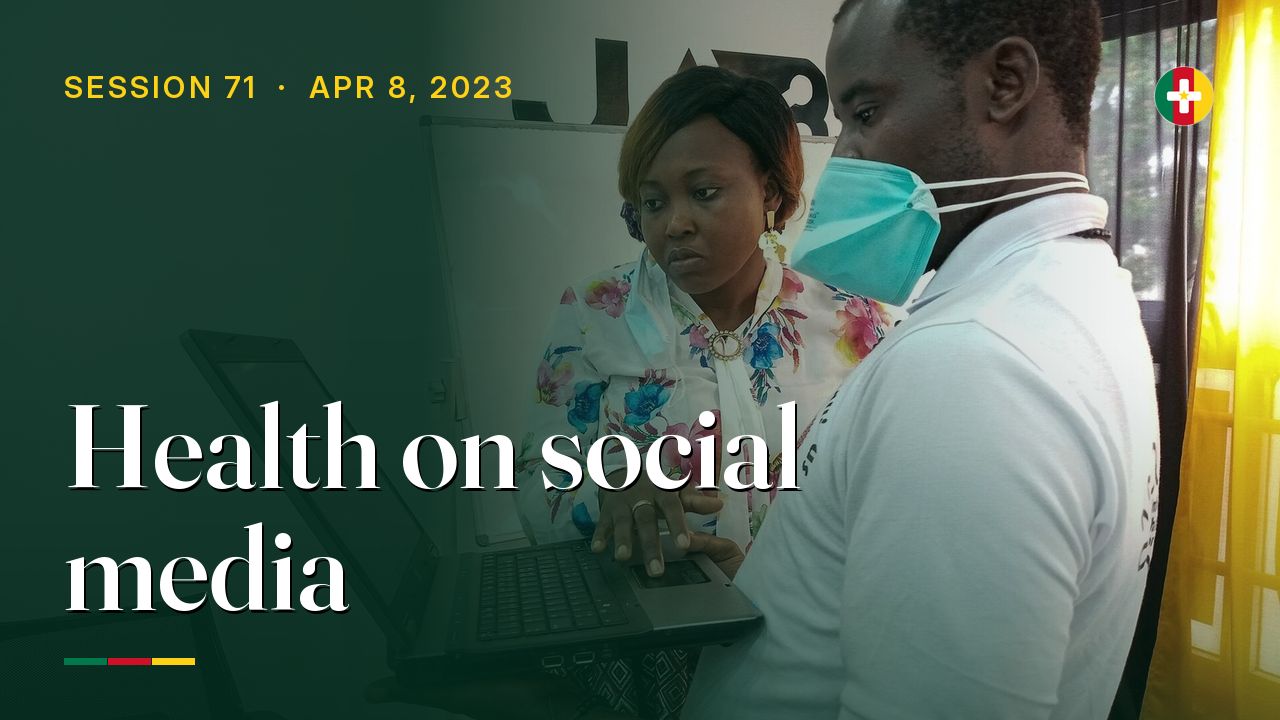
This policy briefing synthesizes key insights from the Cameroon Townhall for Healthcare Professionals meeting held on April 8, 2023 (71st edition), on "The Evolving Role of Social Media in Health Education in Cameroon", presented by Dr. Patrick Ngou, paediatrician and head of paediatrics at Kribi District Hospital.
Context
Children in Cameroon still die of severe malarial anaemia and other preventable conditions, often after self-medication and several prior recourses. At the same time, health misinformation spreads fast on Facebook and WhatsApp. Dr. Ngou showed that a doctor working in mothers' online groups can reach hundreds of thousands of caregivers and change behaviour.
Key issues
- Delayed care and self-medication. In his emergency department study, about half of children had used self-medication first, and deaths rose with the number of prior recourses. Medicines remain too easy to obtain without advice.
- Chronic and orphan malaria. In one school, 35 of 50 children with splenomegaly had a positive malaria rapid test. Children with chronic forms and repeated severe anaemia fall outside national treatment protocols.
- Misinformation at scale. A single post with a home remedy to raise blood was shared about 35,000 times; such advice can kill children with sickle cell disease or severe malaria.
- Doctors absent from digital spaces. Medical faculties and peers still treat online education as unscientific or self-promotion; there is no framework, training or institutional support for doctors who do this work.
- Universal health coverage poorly explained. The public expects UHC to bring specialists and equipment to every hospital, while health promotion, which drives savings, receives little attention.
Discussion highlights
- One seven minute video on cough in children reached an estimated 3 to 5 million viewers and more than 20,000 shares.
- Mothers' Facebook groups of 150,000 to 300,000 members can be turned from sources of risky advice into channels for prevention.
- Comedians and entertainers can carry accurate health messages to large audiences at low cost.
- Comments on health posts are an untapped data source for public health research.
- Waiting room screens can extend digital content to people without smartphones.
Recommendations
- Set up an official digital health communication channel with clinicians. MINSANTE's health promotion services should recruit and support practising clinicians who already have large online audiences, with clear rules separating health education from advertising. First step: a register of doctors active in health education online, and a short charter on content and conflicts of interest drafted with the Order of Physicians and MEDCAMER.
- Rapid response to health misinformation. MINSANTE, with the Cameroon Paediatric Society and other learned societies, should run a monitoring and response unit that answers viral false remedies within days, in French and English, through doctors and partner influencers. First step: a pilot on child health and malaria content in the largest mothers' groups.
- Teach health communication in medical and nursing schools. Faculties of medicine and training schools should add modules on community health, digital communication and countering misinformation, and continuing education sessions should include a community component, as the Cameroon Paediatric Society has begun to do. First step: one elective module at a faculty of medicine in 2023 to 2024.
- Bring chronic malaria and self-medication into programme planning. The National Malaria Control Programme should review guidance for children with recurrent severe anaemia and chronic malaria, and MINSANTE should continue tightening control of the medicine circuit. Regional delegations should track self-medication and delayed referral in paediatric deaths. First step: a protocol review meeting with paediatricians from district hospitals.
- Use entertainment and waiting rooms to reach those offline. Regional delegations and hospitals should play validated health videos in waiting rooms and public transport, and work with comedians and artists to carry key messages. First step: a seminar with comedians and content creators on child health priorities, as proposed in the session.
- Support and evaluate digital health educators. Partners and diaspora professionals should fund community management, paid reach and evaluation for doctors doing this work, and public health researchers should study the reach and behavioural effect of their posts. First step: a town hall follow-up linking Dr. Ngou with diaspora public health researchers to analyse one large campaign.
Next steps
Funding and support for Dr. Ngou's community engagement work, including a community manager, were to be discussed in the parking lot session. The next session was set for two weeks later, April 22, 2023.
Conclusion
Participants agreed that the clinician's role extends beyond the hospital, and that social media, used with method and care, can prevent child deaths that hospitals see too late. Making this work official, trained and supported is a low cost step that also serves universal health coverage.
Meeting minutes
Agenda
- Welcome and opening remarks by the moderators
- Introduction of the guest speaker, Dr. Patrick Ngou
- Presentation by Dr. Patrick Ngou on health promotion and social media
- Participant reactions
- Discussion and Q&A
- Closing remarks by the moderators and the Chair, and next meeting
Opening remarks
- Dr. Christelle Jouego Tagne and Elvis Ndansi welcomed participants to the new edition of the Cameroon Town Hall.
- Dr. Christelle Jouego Tagne said that, while preparing the session, she had asked parents and colleagues about Dr. Patrick Ngou. Parents described a paediatrician who explains things in plain terms, very active on social media, and who speaks firmly to parents who do not follow what was prescribed after an explanation.
- A co-moderator who described Dr. Ngou as his brother and colleague then introduced him.
Presentation
1. From the ward to the community: the starting point
Dr. Ngou said he came not to give lessons but to share his experience as a clinician, a field doctor and a man of social media. He opened with a five year old child seen with recurrent severe anaemia, hepatosplenomegaly and dark urine, transfused about 10 times in one year. Haemoglobin electrophoresis, G6PD testing and viral hepatitis screening were negative; the cause was chronic malaria, although the child slept under a net and the family followed the national malaria programme's advice. The family lived in an unfinished house without ceiling or windows in a marshy area of Biyem-Assi, Yaoundé, about 300 metres from the district hospital. He said that in his young career he had seen more than 200 children die, which meant that 200 times he had looked a mother in the eyes to announce the death, and that he refused to become a specialist in announcing deaths.
2. Study of the therapeutic itinerary of children reaching emergency care
For his medical doctorate he spent six weeks living in a paediatric emergency service and traced the path of every child admitted. About 50% were at their second recourse, and about 50% had used self-medication first, including medicines bought on a pharmacy attendant's advice. No child who came directly to hospital died, while deaths rose with the number of prior recourses, to about 25% (he also said more than 30%) among those with four or more. Severe anaemia was the leading cause of death, followed by coma and convulsions. About 70% of children who died of severe anaemia had a nearby health centre as their next to last recourse, which he read either as a referral pathway followed too late or as staff keeping patients they could not manage. Deaths were significantly associated with low parental education. He praised the Ministry for moving to control the medicine circuit, saying medicines remain far too accessible.
3. Splenomegaly and the orphan forms of malaria
During his paediatric specialisation he looked into a question his teachers could not answer: when is splenomegaly protective and when is it a sign of harm in an area of intense malaria transmission. He examined 1,763 children in a nearby primary and nursery school; 53 had splenomegaly, 3 declined and 50 were included, after HIV testing and haemoglobin electrophoresis to exclude other causes. Thirty five of the 50 (70%) had a positive malaria rapid test, and teachers reported that the anaemic ones were often absent. He called the definitions of asymptomatic and chronic malaria questions specialists must revisit. He described hyperreactive malarial splenomegaly and progressive visceral malaria as orphan forms of malaria that he estimated about 90% of doctors overlook, and said there is no truly asymptomatic malaria and every malaria infection should be treated, given its effects on growth and cognitive development. The five year old was later given daily atovaquone based prophylaxis for eight months and the parents were asked to finish the house.
4. Malaria as an indicator of development
He said malaria mortality is, for him, the best indicator of health and development in Cameroon. Cameroon did not meet the 2015 Millennium Development Goal on malaria mortality despite free treatment and the national programme, and paediatricians are the ones asked to explain why. Community control of malaria concerns councils and decentralised authorities, associations, and the ministries in charge of women and the family, social affairs, finance, defence and public works, not only the health sector. He estimated that about 80% of childhood diseases are preventable through community action and more than 70% through vaccination, while vaccine hesitancy grew in 2018 and 2019.
5. Misinformation and why he went online
The trigger was a Facebook post, shared about 35,000 times, recommending cassava leaves mixed with unsweetened condensed milk and canned tomato to raise blood within three days, with a warning not to exceed three days for fear of excess blood. He said such a post could be applied to sickle cell disease, malignant blood disorders, malaria and chronic disease anaemias and may have killed many children. He then defined the vocabulary of social media in medical terms: community, network, content creation, virality (rapid and uncontrolled expansion, like a virus), likes, visibility and reach. An influencer, he said, is not the person with a million followers but one whose message fits their community and changes behaviour. He considers each of his Facebook posts a scientific publication, and said medicine in Cameroon still tries to adapt the patient to medicine instead of adapting medicine to the patient.
6. Results of his social media work
A seven minute video on cough in children (types of cough, expectorants versus cough suppressants, practical advice), shared on the page of a fellow doctor, reached about 3 million viewers across pages, with 1,073 shares on that page and more than 20,000 in total; he later put its reach at about 5 million mothers. Another post reached about 1 million people with 11,834 shares in a month. He joined a Facebook baby clothing group of about 300,000 mothers, pregnant women and traders, was mocked and insulted at first, and became an administrator; he is also active in a cooking group and a third group of 150,000 women, and said he interacts with about 500,000 to 600,000 mothers daily. He said that the child's first paediatrician is the mother, that Facebook has become his first office, and that a specialist without community activity is limited in his clinical care. Building this community took close to ten years and is full time work.
7. Health by all, health promotion and universal health coverage
He said the slogan health for all has led people to wait for care, and proposed instead that each person is the main actor of their own and collective health, which he called health by all. On universal health coverage, he said child health is its main challenge, since about 70% of paediatric consultations are children under five. He supported securing the medicine circuit and strengthening integrated health centres, sub-divisional medical centres, health districts and the referral system, but regretted poor communication, which leaves people believing coverage means incubators, specialists and operating theatres in every hospital and an end to hospital scandals. There is no universal health coverage without effective health promotion, he concluded, and every clinician needs a grounding in health promotion and community health.
Discussion and Q&A
- Participant reactions Dr. Christelle Jouego Tagne greeted Dr. Kenji as a regular participant and invited newcomers to react. A participant active in the chat called the session fantastic and said the young paediatrician had found his niche.
- Dr. Bryan Tegomoh: how should gaps in health knowledge, what is known and what is not, be communicated? Dr. Ngou said nothing is ever acquired and professionals must adapt to the world and its means of communication, and that science cannot be done for a world that no longer exists. He said any information can be manipulated or challenged, so communicators need an open mind and a clearly chosen field of focus. He recalled organising, in 2018 during his fourth year of specialisation, the first community paediatrics congress, with a documentary on malaria and the national blood transfusion and malaria programmes at the table. Health, he said, is not the property of the medical profession; the patient is first responsible for it, and there is a difference between treating and caring.
- A question on bringing this approach into the training of young doctors He said he learned to communicate from medicine sellers on buses, whom he travelled to watch, because the hospital setting limits what patients will say. He cited Prof. Monekosso, founding director of the University Centre for Health Sciences, as having written that the success of Cameroon's health system would be community health. Through his advocacy, the Cameroon Paediatric Society now asks that every continuing education presentation include a community component, for example showing where a child with cerebral palsy lives and how the mother copes. He said faculties are not yet open to doctors like him, called on young doctors to take responsibility rather than blame their elders, and said MEDCAMER, of which he is vice-president, has made community builders the slogan of its mandate.
- Elvis Ndansi on video format, visibility and support He took the first point as a suggestion: he cuts long videos into shorter clips to keep attention and relaunch debate, and stays in the comments, leaving people free to give their views without being judged. More visibility requires paid promotion and support. He said the comedian Moustik le Charismatique shares one of his posts every Friday with good results, and suggested a seminar with comedians on their role in health, since accurate information passed through entertainment can stop false information early. He described a staged post in the 300,000 member group, a photo of a child on drips presented as looking for the mother who had advised on treating the spleen, which changed how members gave each other medical advice. He invited public health doctors to analyse the comments and profiles on such posts as research data.
- A public health physician in Belgium with WHO experience: how can social media be used systematically for public health messages, including in medical school curricula? Dr. Ngou said doctors must learn to say what they do well without turning it into self-promotion, and that this needs a legal framework. Learned societies are best placed to approach influencers, and influencers must be able to earn a living from the work, since they have no duty to provide care. For the community offline, he described a project to train staff of councils, prefectures, sub-prefectures and traditional chieftaincies in community health and health promotion so they support health associations. He urged doctors to share each other's content and to join local professional associations.
- A participant who takes part in medical missions to Cameroon: how can child nutrition be improved, and would multivitamins help, given that missions last only a week? He said child malnutrition in Cameroon is multifactorial (HIV, intestinal parasites, malaria and diet) and that socio-anthropological studies of eating habits should come first. Food is not what is lacking: meat and fish provide the micronutrients, and importing supplements creates the belief that a child is strong only with a pill or syrup, as with mothers who prefer a syrup to oral rehydration solution for diarrhoea. He said health workers share responsibility for self-medication because facilities depend on selling medicines.
- A participant on institutional support and on using verified, referenced information He said his support comes mostly from individuals, especially diaspora colleagues, and named Jeannette, an intensivist in the United States, whose help brought two incubators to a hospital that had only an old one. He has no institutional support yet, and said recognition often has to come from abroad before it comes from home. On verified information, he called it a double edged sword: mothers are not interested in study references, and many practical questions (for example, transfusion thresholds in a child with very low haemoglobin) have no textbook answer, so he reads widely and tries to concentrate the evidence.
- Chat: how are girls and mothers without a smartphone reached? And an anaesthesiologist and intensivist: how can a specialist like him connect with his own community? He said he reaches part of Facebook and WhatsApp users only, not Instagram or TikTok, and not people without internet. Some hospital directors, play his vaccination videos on screens in waiting rooms, and he suggested buses, travel agencies and hotel lobbies. To the anaesthesiologist he said each specialist knows his field and must find his own way to be present in the community.
- A final question on who manages his pages He said he manages all content and messages himself, and that the ideal community manager would be a doctor with an open mind, a luxury he cannot afford for now. A moderator suggested training community management students instead, and said funding and support options would be discussed in the parking lot session.
Calls to action and closing
- The moderator thanked Dr. Ngou for his presentation and the time he gave to the questions, and passed the floor to each co-moderator and then the Chair for closing remarks.
- The session ended with thanks to Dr. Ngou, wishes for a good Easter weekend, and an invitation to meet again in two weeks.
Next meeting
In two weeks (April 22, 2023).
Submitted by the Co-Moderators, Cameroon Town Hall for Healthcare Professionals.