Pain Management During Labour and Delivery in Cameroon
Overview
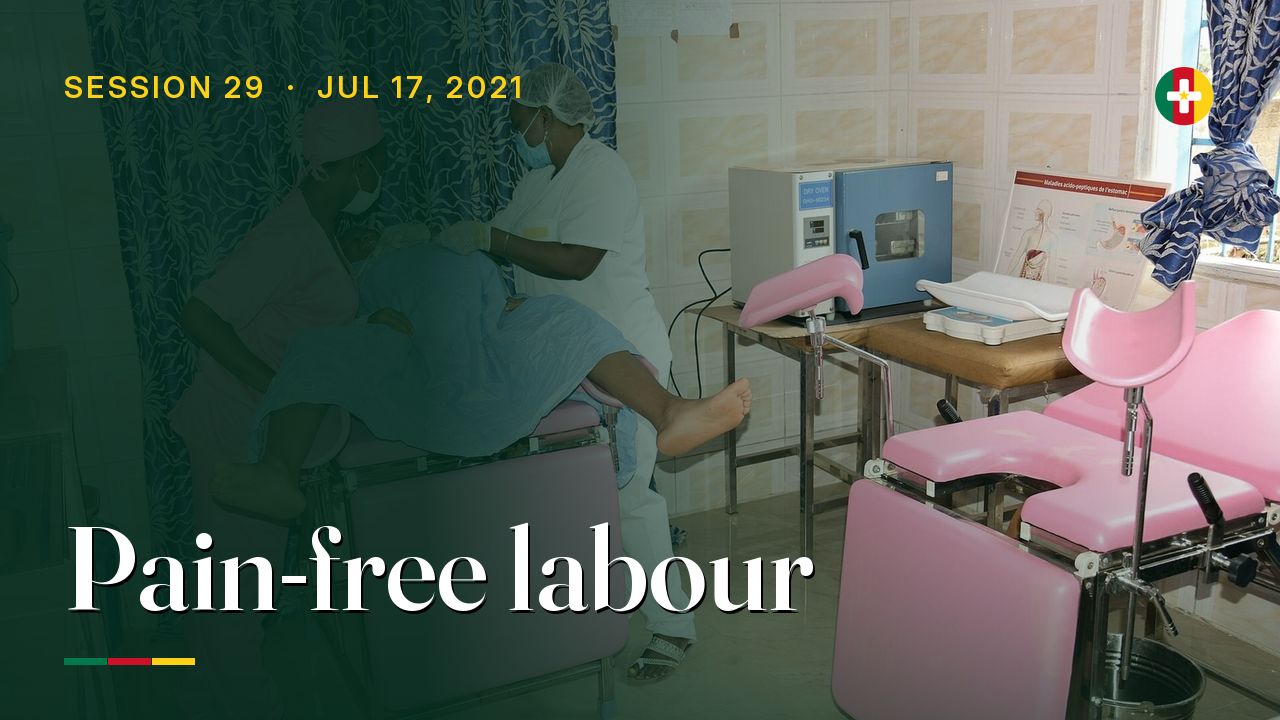
This policy briefing synthesises key insights from the 29th edition of the Cameroon Townhall for Healthcare Professionals, held on July 17, 2021, focusing on the theme "Pain Management During Labour and Delivery: What Every Adult Should Know", presented by Dr. Edwin Aroke and Dr. Njodzeka Venatius Ngong.
Context
Labour pain in Cameroon is often treated as normal and left unmanaged. Few women are offered pain relief, there are about 40 practising anaesthesiologists, and most births take place in health centres without anaesthesia staff. The session brought together nurse anaesthetists in the US, an anaesthesiologist and an obstetrician in Cameroon, and other clinicians.
Key issues
- Pain not believed. Providers and families often dismiss labour pain, though unrelieved pain harms both mother and fetus.
- Workforce gap. About 60 trained anaesthesiologists (about 40 active) serve 25 million people; district hospitals have none.
- Cost. An epidural costs about 50,000 to 60,000 FCFA in public hospitals, while many women cannot afford 6,000 FCFA for a normal delivery.
- Equipment and drugs. Unsuitable large-gauge needles, few monitors, limited fentanyl and almost no nitrous oxide restrict safe options.
- Facilities and culture. Shared labour wards prevent companions, and cultural beliefs link pain to being a 'real woman'.
Discussion highlights
- Many low-cost drugs already on formularies (pethidine, tramadol, paracetamol, nalbuphine) can reduce pain if used safely.
- Non-drug measures (companions, position, compresses, breathing, respectful communication) cost nothing.
- Third-trimester anaesthesia consultations are being introduced in Yaounde.
- Women may see epidurals as a luxury; some clinicians discourage them.
- Diaspora nurse anaesthetists and the Cameroon Society of Anaesthesia agreed to explore cooperation.
Recommendations
- National labour analgesia protocol. MINSANTE, with obstetric and anaesthesia societies, should issue a stepwise protocol for labour pain covering non-drug measures, safe use of available drugs (paracetamol, tramadol, pethidine timing, nalbuphine) and neuraxial analgesia where staff exist.
- Train more anaesthesia providers. MINSANTE and training schools should expand anaesthesiologist and nurse anaesthetist training and deploy staff to regional and district hospitals. First step: partner with diaspora nurse anaesthetists (ACNAA) and the University of Buea on short courses for midwives and nurses in non-opioid analgesia.
- Safe equipment. MINSANTE and partners should procure 25 gauge or finer spinal needles and epidural sets, refuse substandard donated needles, and equip labour wards with maternal and fetal monitors.
- Make analgesia affordable. Regional delegations should publish standard prices for labour analgesia in public hospitals and partners should explore including it in maternal health coverage.
- Antenatal education and respectful care. Antenatal clinics should counsel women on pain and their options, and midwifery and nursing schools should teach respectful, non-judgemental care in labour.
- Companion-friendly labour rooms. Hospitals and new private clinics should design labour rooms with privacy so a chosen companion can stay with the woman.
Next steps
The Chair invited Dr. Ndikontar and the anaesthesia resident from Jerusalem to present on anaesthesia in Cameroon. The next Town Hall was set for July 31, 2021, on cardiac surgery.
Conclusion
Labour pain can be relieved with methods that range from free to specialised. Cameroon's gap lies in workforce, equipment, cost and attitudes, and the session showed that cooperation between diaspora and local anaesthesia professionals can start closing it.
Meeting minutes
Agenda
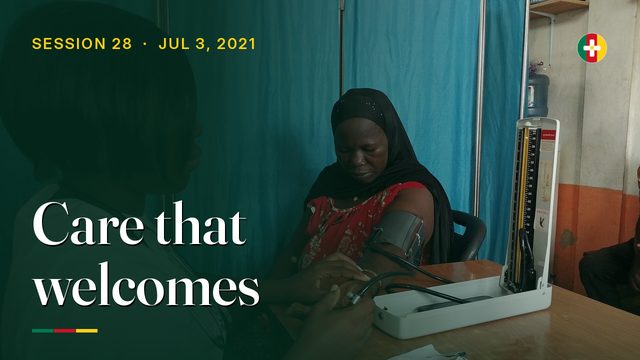
- Welcome and recap of the 28th edition on customer care
- COVID-19 update by the Chair, Dr. Munoh Kenne Foma
- Presentation by Dr. Edwin Aroke on labour pain and pharmacological and non-pharmacological options
- Presentation by Dr. Njodzeka Venatius Ngong on neuraxial analgesia (epidural and spinal)
- Discussion and Q&A, including the situation in Cameroon
- Summary, vote of thanks by the Chair and next meeting
Opening remarks
- Elvis Ndansi recalled the previous session on customer care, where a doctor recounted being told during labour 'even you, a doctor, feeling pain', and the sickle cell session, where a doctor said pain in crisis was treated as pretence. He framed pain management as a test of empathy.
- The lead moderator noted the perception that a woman who has not felt pain in labour has not truly given birth, and that she had heard a Douala hospital charged 400,000 FCFA for labour anaesthesia.
- In his COVID-19 update the Chair reported almost 200 million cases and about 3.4 to 3.5 billion doses given, surges driven by the Delta variant in England, Indonesia and the US, and that 80 percent of hospitalised patients in the US were unvaccinated. He said four vaccines were available in Cameroon (AstraZeneca, Sinopharm, Sputnik and Johnson & Johnson), urged vaccination while cases were low, and said masks should stay.
- The Chair noted that his mother was a midwife, which drew him to medicine.
Presentation
1. Labour pain is real, personal and must be believed
Dr. Aroke defined pain as having sensory and emotional parts, and stressed that it is what the patient says it is. He traced obstetric analgesia to the 1840s (ether, then chloroform for Queen Victoria in 1853). Women often understate labour pain months later, but in labour it ranks among the most severe pains, comparable for a first-time mother without preparation to digit amputation without anaesthesia.
2. Stages and pathways
First-stage pain is visceral, from uterine contraction and cervical dilation, carried by C fibres entering the spinal cord at T10 to L1, which is why epidurals work well. Second-stage pain is somatic, from stretching of the vagina and perineum, carried by A delta fibres through S2 to S4, and can be addressed with pudendal block. Pain often becomes unbearable around 7 cm, when oral and IV drugs work less well.
3. Unrelieved pain harms mother and baby
Hyperventilation causes respiratory alkalosis that reduces oxygen transfer to the fetus, and stress hormones constrict uterine vessels and reduce placental blood flow, risking fetal acidosis. Psychologically, unrelieved pain is linked to anxiety, depression, fear of further pregnancies and sexual problems. Dr. Aroke shared Facebook testimonies from Cameroonian women, including one who delivered in Limbe two weeks earlier with no pain relief.
4. Medicines already on Cameroonian formularies
Pethidine is the most used parenteral opioid worldwide and is cheap; it should be given at least four hours before expected delivery to limit neonatal depression. Tramadol can be combined with paracetamol; low-dose fentanyl and remifentanil give good analgesia with little fetal depression; nalbuphine and butorphanol do not cause respiratory depression; promethazine, hydroxyzine and midazolam reduce anxiety; low-dose ketamine helps. NSAIDs should be avoided in labour. Since most Cameroonians are opioid naive, even IV paracetamol can work well.
5. Non-pharmacological support
Dr. Aroke described a supportive companion in the room, massage, aromatherapy, frequent changes of position, cold or warm compresses and, above all, prenatal education and respectful communication. He named culture (pain that affects men gets solved), health literacy, few trained anaesthetists, lack of fetal and maternal monitors, and provider bias, for example against teenage mothers, as barriers in Cameroon.
6. Neuraxial analgesia: epidural and spinal
Dr. Ngong explained that the epidural is the gold standard: a catheter in the epidural space at L3 to L4 delivers low-concentration bupivacaine (about 0.06 to 0.25 percent) or ropivacaine, often with fentanyl, for as long as labour lasts, while preserving the ability to push. A spinal acts within about five minutes but lasts one to two hours and suits caesarean section; combined spinal epidural gives both. He noted the epidural space is found by loss of resistance, not imaging, so training is essential.
7. Contraindications, complications and evidence
The only absolute contraindication is refusal; relative ones include coagulopathy or low platelets, raised intracranial pressure, sepsis, hypovolaemia and some valve lesions. Complications include hypotension, post-dural puncture headache (treated with blood patch), high spinal, epidural haematoma and local anaesthetic toxicity (treated with 20 percent lipid emulsion). Reviews he cited showed better pain scores and satisfaction with epidural, no difference in Apgar scores or NICU admission, a longer first stage, and no effect of epidural fentanyl on breastfeeding.
8. Nitrous oxide and opioid caution
A 50 percent nitrous oxide and oxygen mix (Entonox), common in Europe, needs little extra training and could suit Cameroon, though a review of 58 publications found mixed results and more nausea and dizziness. Dr. Ngong also cautioned about the opioid crisis and noted tramadol misuse he had seen in Cameroon.
Discussion and Q&A
- Comment from an obstetrician and perinatologist (UK and Middle East) He said pain relief starts with antenatal education, that midwives' attitudes make a large difference, and listed breathing exercises, water, a birth companion, paracetamol then stronger oral drugs, early opioids and Entonox to buy time before an epidural.
- I am a student delivering in a ward with ten beds and no privacy, and cannot pay an anaesthetist. What are my options? (lead moderator) Dr. Aroke recommended preparing mentally with the provider, breathing control, distraction and asking for low-cost drugs such as tramadol, plus a remote companion by phone. Dr. Ngong added upright positions, a cold bottle or warm compress wrapped in a towel, and counter-pressure on the hips.
- What is the practice in Cameroon? (lead moderator to Dr. Ndikontar) Dr. Ndikontar said he does many epidurals at the Yaounde Gynaeco-Obstetric and Paediatric Hospital, often finishing with an end-of-labour spinal. Fentanyl is restricted to specialist centres, IV opioids are avoided for lack of monitoring, and only about 60 anaesthesiologists are trained for 25 million people, about 20 of them retired. Nitrous oxide is available in only one centre he knows, an eye hospital. Discarded 20 to 22 gauge spinal needles sent from abroad cause headaches, and the Cameroon Society of Anaesthesia is advocating for proper equipment. He is introducing third-trimester anaesthesia consultations.
- How much does labour analgesia cost in Cameroon? (lead moderator) Dr. Ndikontar said a consultation costs about 5,000 FCFA in public hospitals (about 15,000 private), an epidural set about 10,000 to 15,000 FCFA when bought in bulk and a vial of bupivacaine about 3,000 FCFA. The total in a public hospital is about 50,000 to 60,000 FCFA, and 100,000 to 150,000 in private clinics.
- Is that affordable? (lead moderator to the obstetrician-gynaecologist) The obstetrician-gynaecologist said experience in a teaching hospital does not represent the average woman: 50 to 60 percent cannot afford 6,000 FCFA for a normal delivery and 40 to 50 percent cannot afford 40,000 for a caesarean. He argued that culture and anthropology shape how women see labour pain, so a positive pregnancy experience and respect for socio-cultural values must come with analgesia.
- Do women see painless labour as a need or a privilege? (Elvis Ndansi) Dr. Ndikontar said a study under way at his hospital suggests many women see it as a luxury for the wealthy, some want it but do not know where to get it, and some gynaecologists discourage it.
- Is epidural use linked to postpartum depression? Dr. Ngong said a systematic review found no significant link, though satisfaction was higher; Dr. Ndikontar said depression reflects the whole pregnancy experience.
- Is there room for task shifting? (lead moderator) Dr. Aroke said nurses could be trained to give non-opioid and less potent drugs, that new clinics should build private delivery rooms, and that health literacy must improve. An anaesthesia resident in Jerusalem described remifentanil patient-controlled IV analgesia with lockout as an option where epidurals are not possible.
- Does screaming in labour help, and are herbal remedies safe? (a doctor from The Gambia) Dr. Ngong said there is no clear evidence; screaming often signals that pain has become intolerable and calls for action, and providers should stay non-judgemental. Dr. Aroke said letting a woman use her own coping is better than suppressing it.
Calls to action and closing
- Elvis Ndansi summarised the key points and welcomed the link between the US association of Cameroonian nurse anaesthetists and the Cameroon Society of Anaesthesia.
- The Chair said Cameroon has about 40 working anaesthesiologists, none in its roughly 180 district hospitals and few in regional hospitals (none in the North West at the time), while most women deliver in about 1,800 health centres. He noted that midwifery training stopped in 1992 and resumed around 2010.
- He invited Dr. Ndikontar and the anaesthesia resident from Jerusalem to present on anaesthesia in Cameroon at a future session.
- The lead moderator urged husbands and families to support women through labour.
Next meeting
In two weeks (July 31, 2021): Sustainable Cardiac Surgery in Sub-Saharan Africa with Dr. Clarence Pingpoh.
Submitted by the Co-Moderators, Cameroon Town Hall for Healthcare Professionals.