Sustainable Cardiac Surgery in Cameroon and Sub-Saharan Africa
Overview
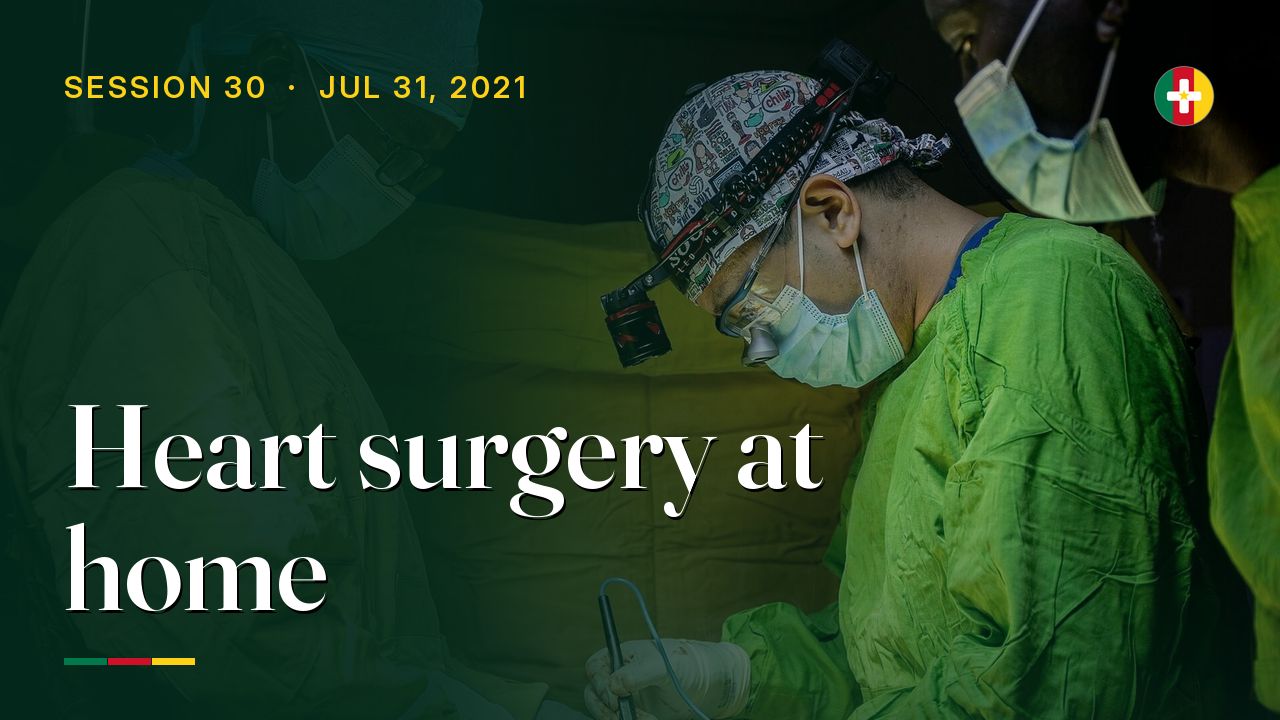
This policy briefing synthesises key insights from the 30th edition of the Cameroon Townhall for Healthcare Professionals, held on July 31, 2021, focusing on the theme "Sustainable Cardiac Surgery in Sub-Saharan Africa: Are We Getting There Any Time Soon?" presented by Dr. Clarence Pingpoh, cardiac surgeon at the University Heart Center Freiburg-Bad Krozingen, Germany.
Context
Rheumatic heart disease affects mainly young people in poor countries, and cardiovascular disease is rising across Africa. Cameroon has one regular cardiac surgery centre, at Shisong, run by a religious order, and Cameroonians who can pay are often sent abroad. Participants included cardiac surgeons, cardiologists and other specialists in the diaspora.
Key issues
- Missing diagnosis and data. Few Cameroonians ever receive an echocardiogram and there is little surveillance of rheumatic or congenital heart disease, so the burden is invisible to decision makers.
- Cost and financing. With about 94 percent of health spending out of pocket and surgery costing several thousand euros, most patients cannot pay.
- Fragmented models. Medical tourism, humanitarian missions and privately run centres are not integrated into the national health system and struggle to last.
- Retention and credentials. Staff trained abroad often do not return, returning specialists find no platform, and there is no board to certify subspecialists.
- Political will. Speakers agreed that experts and much of the skilled staff exist, and that government commitment is the main missing piece.
Discussion highlights
- Cameroonian cardiac surgeons, cardiologists and anaesthesiologists abroad said they are willing to help build a programme.
- A cardiac centre needs a steady flow of diagnosed and referred patients to maintain safe volumes.
- Rwanda's national insurance and Kenya's government-led programme were cited as examples.
- Cardiac rehabilitation should be built in from the start.
- Members proposed a coordinated Town Hall cardiac surgery mission to Cameroon.
Recommendations
- Put cardiac care in national planning. MINSANTE should recognise rheumatic and congenital heart disease and cardiac surgery in the national health strategy and designate a public referral centre linked to a university teaching hospital. First step: a costed plan drawn up with diaspora surgeons and the Shisong and Douala teams.
- Build diagnosis and referral. Regional delegations and training schools should equip district and regional hospitals with basic echocardiography and train primary care staff to detect heart disease and refer, starting with school-age children at risk of rheumatic heart disease.
- Finance through coverage. MINSANTE and partners should include cardiac surgery, at least for children and rheumatic valve disease, in the coverage package being developed, and remove import duties on donated cardiac equipment.
- Train and retain. MINSANTE and the Ministry of Higher Education should pair scholarships abroad with return contracts and guaranteed salaries for the first years back, and create posts for returning specialists.
- Certify specialists. The National Order of Physicians should set up verification of specialist credentials with documented case requirements and speed up recognition of foreign diplomas.
- Coordinate diaspora missions. The Town Hall and diaspora professionals should organise missions that train local teams in partnership with public hospitals, so that each mission leaves skills behind.
Next steps
The Chair proposed working with Dr. Pingpoh towards a cardiac surgery mission once conditions allow. The next Town Hall was set for a fortnight later.
Conclusion
Cameroon has much of the expertise needed for sustainable cardiac surgery, in the country and in the diaspora. What it lacks is a government-backed plan that links diagnosis, financing, training and retention, and the session called for that plan to start now rather than after the burden grows.
Meeting minutes
Agenda
- Welcome and opening remarks by the moderators
- COVID-19 update by the Chair, Dr. Munoh Kenne Foma, with discussion on masks and CDC guidance
- Presentation by Dr. Clarence Pingpoh on "Sustainable Cardiac Surgery in Sub-Saharan Africa: Are We Getting There Any Time Soon?", with two audience polls
- Discussion and Q&A
- Summary, closing remarks by the Chair and next meeting
Opening remarks
- Elvis Ndansi recalled the previous session on pain management during labour and delivery and noted the range of Cameroonian specialists in the network, from neurosurgeons to cardiovascular surgeons.
- Dr. Bryan Tegomoh welcomed participants to the 30th edition and said sustainable surgery in Africa needs both infrastructure and technical skills.
- The lead moderator and Louisa Viban were absent on other duties; Dr. Christelle Jouego Tagne co-moderated.
- In his COVID-19 update the Chair said the Delta variant was driving a resurgence, that vaccinated people rarely became very sick but breakthrough infections carried viral loads similar to the unvaccinated, and that mRNA vaccines remained about 88 percent effective against Delta. He cited almost 200 million cases, about 4.4 billion doses given worldwide, and vaccine inequity. Vaccines available in Cameroon included AstraZeneca, Johnson & Johnson, Sputnik and Sinopharm, and Cameroon had received almost a million Johnson & Johnson doses donated by the United States. He urged people at home to take whichever vaccine was available.
- Asked about mask guidance for vaccinated people, the Chair described himself as a mask advocate on empirical grounds: about 20 of some 200 residents at his New York hospital fell ill in the first week of the pandemic, and fewer than five after the hospital mask mandate. Dr. Tegomoh said the virus had humbled everyone, that equal viral loads in vaccinated and unvaccinated Delta infections were unexpected, and that CDC was updating guidance on the evidence available.
Presentation
1. What cardiac surgeons do and how they train
Dr. Pingpoh described cardiac surgeons as people who repair what is damaged in the heart: repairing or replacing valves, bypassing blocked coronary arteries, transplanting hearts and implanting assist devices. In Germany training takes six years, with a set number of cases required before the specialist exam, and most surgeons add a subspecialty such as vascular or thoracic surgery. He stressed that cardiac surgery is distinct from cardiology but depends on it.
2. A cardiac surgical unit is a team
Citing a 2016 EACTS paper, he listed the minimum team: at least one senior cardiac surgeon, a general surgeon, at least two cardiologists, intensive care cover, nurses and perfusionists, supported by vascular and general surgery for complications. Patients need care before, during and after surgery, including a cardiac intensive care unit and diagnostic equipment with staff to run it. Primary care physicians must recognise heart disease early and refer.
3. Rheumatic heart disease is a disease of the poor
Dr. Pingpoh cited about 39 million people living with rheumatic heart disease, over 90 percent in low and middle income countries and mostly under 40, with surgery as the end-line treatment. He noted Cameroon's very young population and a per capita income of roughly 1,500 euros, and the WHO estimate of about 17 million cardiovascular deaths a year, more than 80 percent in low and middle income countries. He said governments tend to treat malaria and typhoid as the priority while cardiovascular disease grows.
4. No African association, little data
He pointed out that Europe, America and Asia have cardiothoracic surgery associations but Africa does not, and that these associations had planned, before COVID-19, to place senior surgeons in African centres. Most published data on cardiac surgery in Africa come from visiting humanitarian teams, and over 90 percent of their patients are paediatric or rheumatic cases.
5. Three models seen in Africa
He described the Ghana model, where Prof. Frimpong-Boateng lobbied from 1981, laid the first brick in 1989 and largely financed the centre through personal effort with partial government integration, and contrasted it with Kenya, where government integrated the programme and paid a senior surgeon to build it. Medical tourism to India or South Africa serves only those who can pay and drains local units of cases. Humanitarian missions by expatriates are not integrated into the health system and take 10 to 15 years to produce an independent team.
6. The Shisong experience
The Cardiac Centre at Shisong had a resident cardiac surgeon, two cardiologists, a cardiac anaesthesiologist and an ICU that he found newer than his own centre's at the time of his visit. Its limits were that it was privately run by the Tertiary Sisters, not fully integrated in the health system, hard to reach, and costly; the moderator's summary put an average operation at about 4,500 euros. He also noted a 2012 Belgian mission at Douala General Hospital that operated on about 45 patients.
7. What sustainability requires
Dr. Pingpoh listed finance (government, NGO or private), integration into a functioning health system with trained referring physicians, an insurance scheme to make surgery affordable (citing Rwanda's national insurance), enough annual case volume to keep teams safe, and above all political will. He said small steps matter and that informing professionals, as the Town Hall was doing, was a start.
Discussion and Q&A
- Should Cameroon aim to be another Rwanda or build its own system from the bottom up? (Elvis Ndansi) Dr. Pingpoh said Cameroon does not lack cardiac surgeons, cardiologists or anaesthesiologists, many abroad and willing to help; nurses, scrub nurses and perfusionists exist in Cameroonian hospitals. What is missing is political will.
- Can the private sector solve this without waiting for government? (Elvis Ndansi to a US gastroenterologist) The gastroenterologist said mission hospitals do a great deal, citing a US NIH R01 grant of about 5 million dollars through the Baptist mission for hepatitis B research, but government policy (for example import taxes on donated equipment) can block private efforts and the poor still need public coverage.
- With 94 percent of health spending out of pocket, should cardiac surgery be covered by social insurance? (Elvis Ndansi) Dr. Pingpoh said it should be part of an insurance scheme, which international partners could support, but that government should invest first in prevention through trained and motivated staff, including in rural areas.
- Do we have the surveillance data on rheumatic heart disease needed to convince decision makers? (Dr. Tegomoh) Dr. Pingpoh called Cameroon a 'black hole' for cardiovascular data: many patients die at home undiagnosed and diagnostic equipment is lacking. He noted Germany's first open heart operation was in 1958 and Ghana's in 1964, yet the gap is now wide because government only acted decades later.
- If specialists opened a private cardiac centre in Cameroon, what would be the main obstacle? (Elvis Ndansi) An interventional cardiologist said fewer than 1 percent of Cameroonians ever get an echocardiogram, so a centre needs a diagnostic and referral pipeline down to district level to reach safe volumes. A second cardiologist stressed the wider team and infrastructure around the surgeon. Dr. Pingpoh added that units should be tied to university medical faculties so students learn the field.
- How do we retain those we train? (Chair) The Chair recalled that in 2008 the government sent nurses, anaesthetists and young surgeons to France and Belgium and, to his knowledge, about 80 percent did not return. Dr. Pingpoh described a German approach in which a returning professional's salary is covered for two to five years, and suggested Cameroon pair training abroad with such guarantees.
- Why do specialists who return clash with the system, and what about people who claim specialist titles after short courses? (a doctor in Tokyo and the Chair) Dr. Pingpoh said doctors are service providers and must return with humility, and that competition for a single top spot holds back collaboration. On credentials he said no one becomes a cardiac surgeon in weeks or two years, and that boards with documented case logs are needed. Elvis Ndansi called on the National Order of Physicians to verify foreign qualifications and suggested anonymous whistleblowing channels.
- Comment from a cardiac rehabilitation specialist in Bamenda He described failing to convince the Shisong management to set up a cardiac rehabilitation unit. Dr. Pingpoh said rehabilitation is an integral, mandatory part of cardiac surgery in Germany.
Calls to action and closing
- Elvis Ndansi summarised the session: infrastructure, trained staff and equipment; rheumatic heart disease in a young population; the three models; the cost at Shisong against incomes in Cameroon; the need for insurance, diagnosis and referral, retention incentives and political will.
- The moderator noted that the Minister of Public Health was expected to speak at a future Town Hall, with a date still being arranged.
- The Chair, a classmate of Dr. Pingpoh, thanked him and proposed that the Town Hall work with him towards a cardiac surgery mission to Cameroon once the crises at home ease. He invited the US gastroenterologist to give a future talk.
- Dr. Pingpoh said the discussion should move from talk to practical action soon.
Next meeting
In a fortnight (expected August 14, 2021); topic not announced.
Submitted by the Co-Moderators, Cameroon Town Hall for Healthcare Professionals.