Customer Care in Healthcare Facilities in Cameroon and Its Impact on Health-Seeking Behaviour
Overview
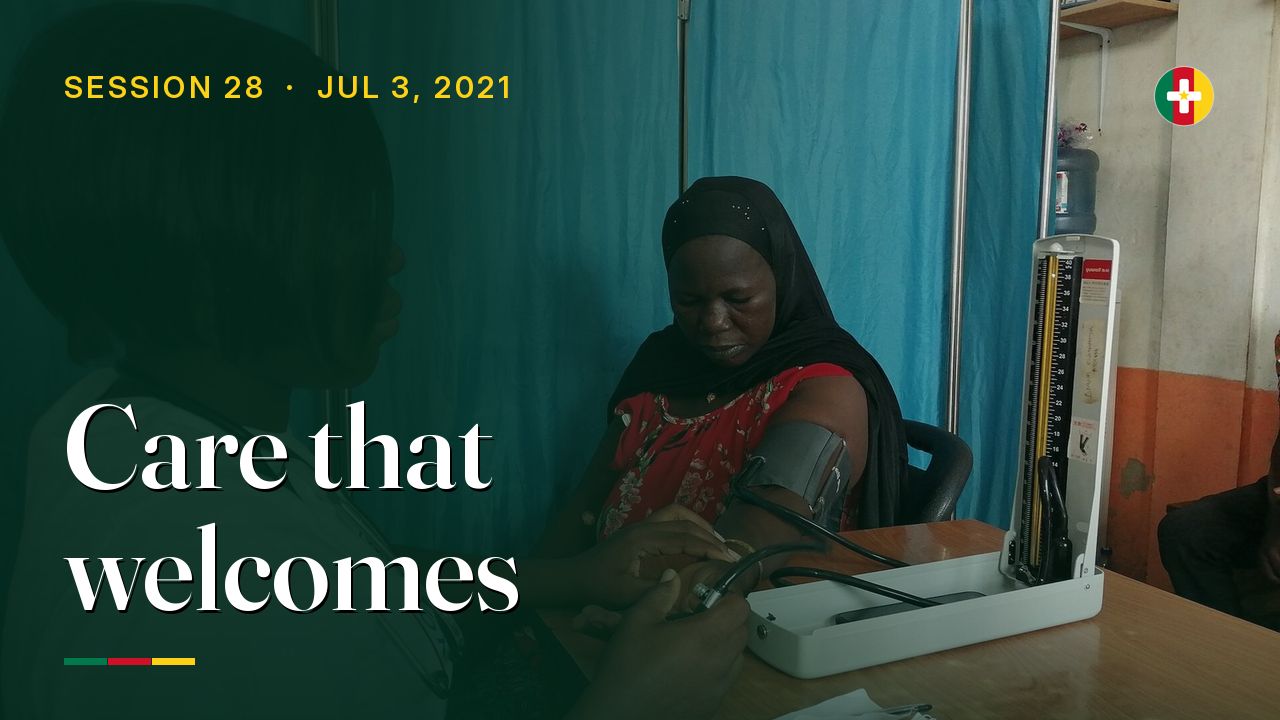
This policy briefing synthesises key insights from the 28th edition of the Cameroon Townhall for Healthcare Professionals, held in July 2021, focusing on the theme "Customer Care in Healthcare Facilities in Cameroon: Impact on Health-Seeking Behaviour."
Context
The topic arose from the previous session on sickle cell disease, where a doctor living with the condition said fear of how he would be treated in hospital was worse than the crisis itself. Participants, including doctors, nurses, an HIV researcher and mothers who had delivered in Cameroon, described how disrespect, poor communication and lack of empathy keep patients away from facilities, push women towards home births and weaken retention in HIV care.
Key issues
- Poor client experience deters care. Rude reception, dismissal of pain (notably in labour) and breaches of confidentiality lead patients to delay care, use herbalists or deliver at home.
- Working conditions. Heavy caseloads (about 50 consultations a day), low pay and second jobs drive burnout and, in some cases, informal charges to patients.
- Weak accountability. Complaints rarely lead to action, reported staff may be protected by connections, and regulatory sanctions are uncommon.
- Ethics gaps in training. Ethics and customer service receive little time in medical and nursing curricula and almost none in continuing education.
- Bypassing primary care. With about 94 percent of health spending out of pocket and health centres often lacking water and staff, patients go straight to referral hospitals, adding to congestion.
Discussion highlights
- Satisfaction with services was described as one of the strongest determinants of access and of retention in HIV care.
- Cases of HIV testing without consent were reported, and stigma was said to be perpetuated within the health system.
- Rwanda was cited as an example where leadership has made HIV services accountable.
- Carers accompanying patients are a frequent source of conflict and need clear information on arrival.
- Recognising staff who treat patients well matters as much as sanctioning poor conduct.
Recommendations
- Patient feedback at every facility. MINSANTE and regional delegations should require hospitals to run a short exit survey and a complaints channel managed by a patient satisfaction unit independent of the director, with results used in staff appraisal and recognition. First step: pilot in one regional hospital and one district hospital per region.
- Patients' charter. MINSANTE should publish a patients' bill of rights in English and French, to be displayed and handed out at reception, covering consent, confidentiality and how to complain. Reception or customer service desks should also brief carers on what to expect.
- Ethics and communication in training. Faculties of medicine, nursing and midwifery schools and laboratory training institutions should teach ethics, consent, confidentiality and client care across all years, not as a single course. Regional delegations should add these topics to continuing education, starting with maternity and HIV care staff.
- Working conditions and fair postings. MINSANTE should review pay and workload norms for public health workers and test district-level recruitment, so that staff apply for posts they are willing to serve in.
- Accountability through professional bodies. The medical, nursing and laboratory professional orders should publish complaint procedures and act on substantiated cases, with clear protection from interference by connected individuals.
- Strengthen the first level of care. MINSANTE and partners should equip health centres with water, staff and basic diagnostics and inform communities about the health pyramid, so that referral hospitals can focus on complex cases.
Next steps
The Town Hall will keep the topic open in future sessions. Members in leadership posts were asked to start training and audit with feedback in their own facilities.
Conclusion
The session showed that customer care is a barrier to health-seeking behaviour on the same level as cost and distance. Participants agreed that the same professionals perform well where systems hold them accountable and support them, so change must combine training, feedback, fair conditions and leadership.
Meeting minutes
Agenda
- Welcome and opening remarks by the lead moderator, recap of the 27th edition on sickle cell disease
- COVID-19 update by the Chair, Dr. Munoh Kenne Foma
- Moderator-led open discussion on customer care in Cameroonian health facilities
- Summary of proposed solutions
- Vote of thanks by the Chair and closing
Opening remarks
- The moderator welcomed participants to the 28th edition of the Town Hall and recapped the 27th edition on sickle cell disease, which heard from Dr. Munoh Kenne Foma on its pathophysiology, a sickle cell advocate, and Dr. Ferdinand (a doctor living with sickle cell disease, now in Germany) on care in Cameroon and Germany.
- The topic was prompted by that session: a doctor living with sickle cell disease said the thought of going to hospital during a crisis frightened him more than the crisis itself, because of how he was treated and because staff at times assumed he was pretending to be in pain.
- The session had no guest presenter. It was run by the moderators as an open discussion, with participants invited to speak from their experience as patients and as providers.
- The Chair gave a COVID-19 update: over 3 billion people vaccinated worldwide (about 3.14 billion doses), almost 200 million infections and about 4 million deaths. Cameroon was emerging from its second wave but vaccine coverage was very low; at the current pace he estimated it would take about 10 years to vaccinate the country. He noted the rise of the Delta variant, that hydroxychloroquine does not work, that monoclonal antibodies and interleukin-6 inhibitors have a role, and that the benefit of vaccines outweighs the rare myocarditis signal being monitored by the CDC.
- In reply to a question from the chat, the Chair and Dr. Tegomoh said no country had yet reached herd immunity. Dr. Tegomoh cited Iceland at about 77 percent, the US at about 53 percent and Cameroon at under 5 percent.
Presentation
1. Patients are also clients
The moderators framed patients as clients of the facility who pay the bills on which hospitals run and who deserve good customer care. Elvis Ndansi noted that patients in Cameroon tend to give up their power on entering a hospital, leaving the provider as the 'king'. Perceived quality of care, as the patient experiences it, often differs from what the provider thinks matters most.
2. A wider culture of poor service
Several participants, including Dr. Kenji, described rude service in banks, money transfer agencies and the electricity utility, and argued that the health sector reflects a broader social pattern. Dr. Kenji added that health workers are held to a professional ethic beyond that of other sectors, because a patient who arrives with malaria can leave with psychological trauma if shouted at, for example by a phlebotomist who cannot find a vein.
3. Maternity and pain
Maternity and paediatric wards were named as the areas with the most complaints. A doctor in the audience recounted being told during her first labour that as a doctor she should not complain of pain, and noted that women who cannot afford tertiary hospitals receive even less empathy. Speakers linked such experiences to women choosing to deliver at home or with traditional birth attendants.
4. Workload, pay and burnout
Several speakers tied poor attitudes to working conditions. A senior clinician in Cameroon described consulting about 50 patients a day without a break, and another doctor described staff taking second jobs in private facilities because public salaries are insufficient. The Chair argued that poorly paid workers end up extorting patients, for example asking families for 5,000 FCFA and three donors before a blood transfusion, in a system without universal health coverage.
5. Ethics, confidentiality and HIV care
Dr. Rogers Ajeh said satisfaction with services is one of the strongest determinants of access and of retention in HIV care, drawing on a Cameroon cohort of about 15,000 people. He reported cases of people tested for HIV without consent, which he was presenting at the International AIDS Conference that month, and said stigma is often perpetuated by the health system itself. Dr. Kenji noted that ethics was a one-credit course in his training and that seminars cover new malaria and HIV algorithms but never ethics or confidentiality.
6. Accountability and leadership
Dr. Ajeh said practitioners he reported were often protected by connections up to the regional delegation, and contrasted this with Rwanda, where strong leadership has made HIV services accountable. Louisa Viban noted that doctors posted to areas they did not choose bring resentment to their work, and proposed decentralised recruitment by health districts. The Chair said the same Cameroonian professionals perform well abroad, where actions carry consequences, and that the difference lies in the system rather than the people.
7. Patients, carers and the health pyramid
A senior clinician in Cameroon said carers accompanying patients, rather than patients themselves, are often the source of conflict, and that a proper reception service would set expectations. He also noted that patients with minor illnesses crowd referral hospitals while health centres stand empty. Elvis Ndansi pointed out that with about 94 percent of health spending out of pocket, and performance-based financing rewarding patient volume, gatekeeping is hard to enforce; the Chair added that many health centres lack water and staff, so patients have reason to bypass them.
Discussion and Q&A
- Has any country reached herd immunity through vaccination? (chat) The Chair and Dr. Tegomoh said none had. The Seychelles had reached about 71 percent but still saw breakthrough cases, Iceland was near 77 percent, the US about 53 percent and Cameroon under 5 percent.
- Would an exit audit and feedback system have changed how the midwife treated you? (Elvis Ndansi to the doctor who described her labour) She said it would have, and cited the Minister of Public Health's unannounced visits to facilities as an example of how oversight changes behaviour, while insisting that staff should not need to be watched to treat patients with respect.
- Do the large regional HIV databases capture health-seeking behaviour? (Dr. Tegomoh to Dr. Ajeh) Dr. Ajeh said this was outside the mandate of IeDEA, but the HIV cohort showed a direct link between how patients are treated and whether they stay in care.
- How can power be given back to patients? (Elvis Ndansi) Dr. Ajeh proposed patient education on their rights plus an independent patient satisfaction service, not under the hospital director, that receives complaints and passes them to decision makers. Elvis Ndansi suggested a patient bill of rights handed out on arrival.
- Why does everyone seem angry, and why do people with connections jump the queue? (a doctor now practising in Japan) The same doctor, who formerly practised in Cameroon, described refusing to see a well-connected patient ahead of an emergency at a hospital in Yaoundé and being called by the regional delegate. Elvis Ndansi linked general anger to a low national 'happiness index' and many unresolved triggers across sectors.
- Can patients with minor illnesses be kept out of referral hospitals? (a senior clinician in Cameroon) Elvis Ndansi and the clinician agreed this is hard while payment is out of pocket and performance-based financing rewards volume. The Chair asked whether doctors themselves would use those health centres, and said investment in them comes first.
Calls to action and closing
- Elvis Ndansi summarised the proposals: train staff to be empathetic, exit audit and feedback tied to reward or sanction, a public feedback platform with safeguards against misuse, review of health worker pay, a justice system in which patients can sue and see judgments enforced, and ethics and customer service across the training curriculum with continuing education.
- The moderator asked participants to practise empathy and ethics and asked those in leadership posts to organise training and run audits with feedback.
- The Chair thanked the moderators and invited members to propose topics or offer to present, noting that the Town Hall belongs to its members.
- The next session was announced as a presentation by a guest team, details to follow on the flyer.
Next meeting
To be announced on the next flyer.
Submitted by the Co-Moderators, Cameroon Town Hall for Healthcare Professionals.