Strengthening Diabetes Care in Cameroon
Overview
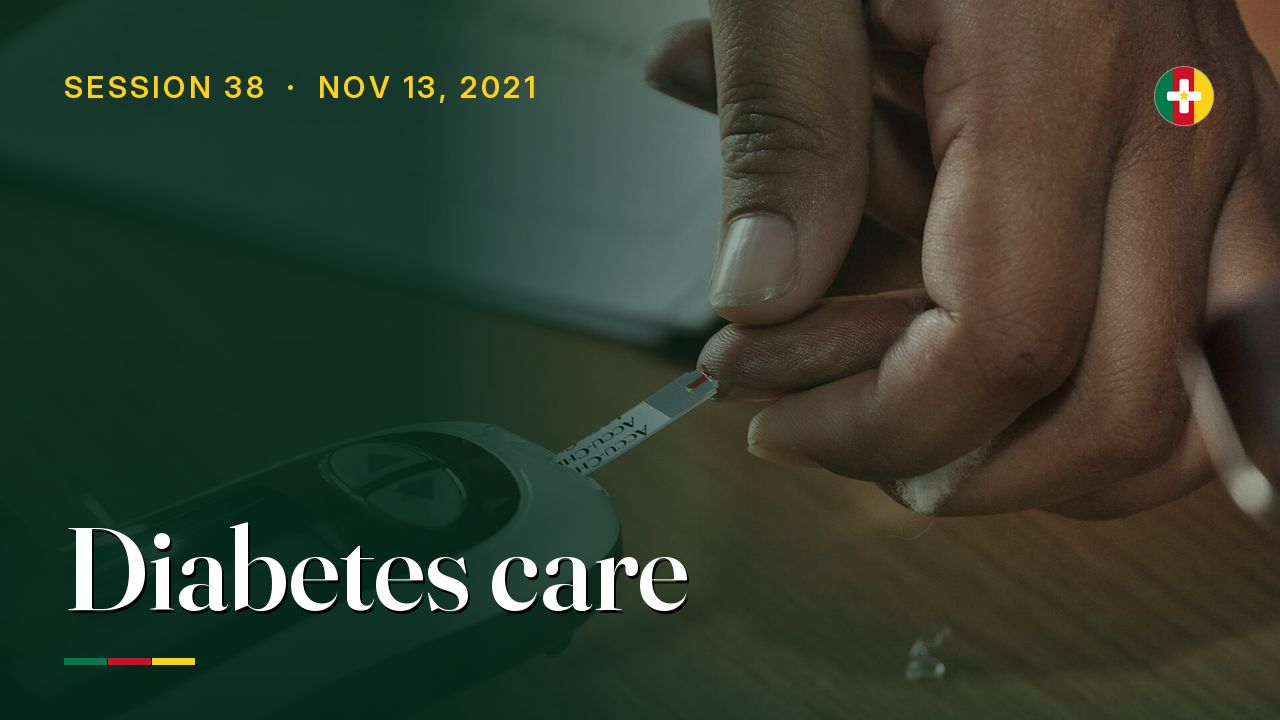
This policy briefing synthesizes key insights from the 38th Cameroon Town Hall for Healthcare Professionals meeting, held on November 13, 2021, focusing on the theme "Diabetes Care in Cameroon," presented by Dr. Katte Jean-Claude and Mr. Ferdinant M. Sonyuy of the Reconciliation and Development Association.
Context
Diabetes affects about 6 to 8 percent of adults in urban Cameroon, most of them undiagnosed, and only about a quarter of treated patients are controlled. Care is paid out of pocket, insulin access is unreliable 100 years after its discovery, and NCD programmes depend largely on external partners.
Key issues
- Underdiagnosis and poor control. About 80 percent of people with diabetes do not know it; complications such as neuropathy, retinopathy and diabetic foot are common at diagnosis.
- Cost and access to medicines. Out-of-pocket payment and limited insulin access drive non-adherence; newer drug classes are available only to those who can pay.
- Weak chronic care organisation. Diabetes clinics often rely on part-time staff, and the Ministry's NCD department remains underfunded.
- Limited involvement of patients. People living with diabetes have little voice in decisions on their care and medicines.
Discussion highlights
- Treating according to the 2017 national algorithm reduced adverse effects.
- The Bafoussam diabetes unit showed that one committed clinician with hospital support can cut deaths from diabetic emergencies.
- Rainy season decompensation calls for tighter control from August to October.
- Communication, screening and primary prevention were seen as at least as important as new funding.
Recommendations
- Extend dedicated diabetes units to every regional hospital. MINSANTE and regional delegations should replicate the Bafoussam model: a designated area, full-time trained nurses, a dietitian, point-of-care HbA1c and an insulin protocol for emergencies. First step: a short guide and training package drawn from the Bafoussam and Changing Diabetes in Children clinics.
- Secure affordable insulin and essential diabetes medicines. MINSANTE should include insulin, metformin and glucose testing supplies in a subsidised essential package for chronic disease, building on existing access programmes, with prices monitored.
- Screen adults and train clinicians on the national algorithm. Hospitals and health districts should offer yearly glucose screening to adults over 30 and train prescribers in the 2017 national treatment algorithm.
- Involve people living with diabetes in decisions. MINSANTE, hospitals and partners should include people living with NCDs on programme and policy committees, in line with the Global Charter on Meaningful Involvement, which the town hall Chair has endorsed.
- Fund the NCD programme and prevention in schools. Government should allocate domestic funds to the NCD department and support the Ministry of Secondary Education in rolling out the NCD school curricula; researchers and civil society should develop competitive proposals for international NCD funding.
Next steps
Members were invited to endorse the Global Charter. The Chair announced a planned podcast series on one cancer a month.
Conclusion
Diabetes in Cameroon is common, undiagnosed and poorly controlled, but local examples show what organised care can achieve. Domestic investment, involvement of patients and a focus on prevention can turn these examples into national practice.
Meeting minutes
Agenda
- Welcome by the lead moderator and greetings from co-moderators
- Remarks by the Chair, Dr. Munoh Kenne Foma
- Announcement on the session time change
- Presentation by Dr. Katte Jean-Claude on diabetes care in Cameroon
- Presentation by Mr. Ferdinant M. Sonyuy on community engagement and meaningful involvement of people living with NCDs
- Discussion and Q&A
- Summary, closing remarks by co-moderators and the Chair
Opening remarks
- The lead moderator welcomed participants; Elvis Ndansi sent apologies.
- The Chair reminded participants that the town hall belongs to them and aims to change health care in Cameroon "one day at a time", linking diaspora and in-country professionals and supporting projects born from the town hall.
- Participants were told that, because of the US daylight saving change, the session remained at 1 p.m. US Central time but now started at 7 p.m. Cameroon time.
- Dr. Bryan Tegomoh introduced Mr. Sonyuy, who began as a finance clerk at the Cameroon Baptist Convention, became a grant writer and then pioneer manager of the CBC NCD Prevention and Control Program, and is a One Young World Ambassador. Dr. Katte, a regular town hall participant, was introduced by Dr. Christelle Jouego Tagne.
Presentation
1. Diabetes is rising fastest among young Africans
Dr. Katte cited International Diabetes Federation figures of about 16 million Africans with diabetes in 2017, projected to reach 41 million by 2045 (a 156 percent increase), with four in five adults with diabetes living in low and middle income countries. Prevalence is higher in urban than rural areas, and unlike in Europe, where diabetes deaths occur mainly after 65, deaths in Africa peak between 30 and 49, the economically active population. He noted that African health systems were built around infectious disease, not chronic care.
2. Types, diagnosis and treatment
He reviewed type 1, type 2 and gestational diabetes and the four diagnostic tests: fasting plasma glucose of 1.26 g/L or more (twice), a 75 g oral glucose tolerance test with a two-hour value of 2.0 g/L or more, HbA1c of 6.5 percent or more, or a random glucose of 2.0 g/L or more with symptoms. All are available in Cameroon, though HbA1c only in some centres. Treatment starts with lifestyle change and metformin and escalates to sulfonylureas, other oral agents or insulin. He noted that 100 years after insulin was discovered, most of sub-Saharan Africa still lacks reliable access to it.
3. The situation in Cameroon
Prevalence is about 6 to 8 percent, higher in towns, with about 80 percent of people with diabetes unaware of it and only about 25 percent of those treated well controlled. NCDs were estimated to cause 62 percent of deaths (Ministry and CDC data, 2005). His team's meta-analysis put adult prevalence in Africa at about 5.8 percent, and a 2014 semi-urban study in the West Region found combined diabetes and hypertension in 6.9 percent of men and 8.1 percent of women. He credited Prof. Jean Claude Mbanya, as IDF president, with bringing diabetes and NCDs onto the United Nations agenda.
4. Complications and local research
A six-country study found that only 47 percent of patients in specialist centres had an HbA1c test in the past year (median 8.2 percent) and 48 percent had neuropathy. One Cameroonian study found diabetic retinopathy in 43 percent of patients; his team's smartphone-based eye screening found about 16 percent. Among hospitalised patients at the Yaoundé Central Hospital, about half were admitted for diabetic foot wounds and mortality was 7.6 percent. A study in the Centre Region found more new-onset diabetes and admissions during the rainy season, so patients should be tightly controlled from August to October.
5. Treatment practice and adherence
Cameroon adopted a national treatment algorithm in 2017, adapted from the American Diabetes Association. His team found that patients treated in line with the local algorithm had fewer adverse effects (for example hypoglycaemia in 11 percent against 25 percent). Non-adherence was linked to forgetfulness, cost (care is paid out of pocket), multiple medicines and the belief that diabetes had gone. Many patients also take herbal preparations such as moringa and stevia.
6. National programmes
Dr. Katte described the Changing Diabetes in Children programme (led by Novo Nordisk with the Ministry and partners since 2010), which provides free insulin, training, registries and nine clinics in all regions except East and South; the Cameroon Diabetes Program (2017), piloted in the Centre and North West Regions, which produced an electronic patient registry and education materials; and a school programme whose NCD curricula were handed to the Ministry of Secondary Education, alongside a free app on the composition of Cameroonian dishes.
7. Building a diabetes unit from scratch
As a young emergency doctor at Bafoussam Regional Hospital in 2012, Dr. Katte saw frequent deaths from diabetic emergencies. With his director's support he organised a World Diabetes Day screening of over 1,200 adults, began counselling in a single room, and grew it into a unit with seven beds, a dietitian, a diabetic foot room, point-of-care HbA1c and nurses trained in electric syringe insulin protocols, which reduced deaths from diabetic emergencies. By 2015 it had more than 70 registered children; he recalled a 13-month-old in diabetic coma first treated as severe malaria who survived.
8. Meaningful involvement of people living with NCDs
Mr. Sonyuy argued that, as with HIV, where the involvement of people living with HIV helped make treatment widely available, people living with diabetes and other NCDs must take part in decisions about their care. He presented the Global Charter on Meaningful Involvement of People Living with NCDs, launched by the Global NCD Alliance in September 2021 after eight months of consultation, with five principles (rights-based, respect and dignity, people-centred, equity, social participation) and ten core strategies, warning against tokenism. He asked the town hall to endorse the charter.
Discussion and Q&A
- A participant asked in the chat about diabetes in pregnancy. Dr. Katte said diagnosis is complex: the standard is an oral glucose tolerance test after 24 weeks, but in Africa a single fasting test, often capillary, is increasingly used. Gestational diabetes can often be managed with diet but may need insulin; it affects outcomes for mother and baby and raises the mother's later risk of diabetes. Strategies to limit weight gain in pregnancy are needed.
- The lead moderator asked Mr. Sonyuy about the successes and challenges of community work on diabetes. He said the cost of medicines is raised every year on World Diabetes Day, that the health system still gives chronic care little priority and staff in diabetes clinics are usually part-time, which discourages innovation such as home follow-up. He cited dialysis patients in the North West who successfully pressed for care closer to home. He had helped strengthen about 12 diabetes clinics and said the Novartis Access initiative had not worked.
- The lead moderator asked how NCDs such as diabetes could attract more funding when most donor money goes to infectious diseases. Dr. Katte said the Ministry's NCD department, created in 2004, still lacked funds, and that Cameroon needs local activity and strong scientific proposals to compete for international NCD funds. Mr. Sonyuy said funders look for proven solutions and gave the example of an Oxford collaboration now funding African NCD research. The Chair said government spends less than 5 percent of national income on health against a target of 15 percent, that NCD outcomes are harder to measure for donors, and that integration into existing platforms and sustainability planning are needed.
- A public health physician involved in policy said donors prioritise transmissible diseases that threaten them and that Cameroon has not invested enough of its own money, and asked whether more funding is really the first need. He argued that effective communication should come before more funding, since stigma and beliefs follow chronic disease, and that the town hall should first define what funds would be used for.
- A laboratory medicine specialist stressed screening adults over 40 every one to two years and reversing pre-diabetes through lifestyle change, and asked whether the children shown had type 1 or type 2 diabetes. Dr. Katte said anyone over 30 should have a yearly plasma glucose test, as type 2 diabetes is now seen in people in their 20s and 30s, and that type 1 and type 2 are hard to distinguish in children in Cameroon without antibody or C-peptide tests, which his doctoral research addresses. Mr. Sonyuy added that communication and advocacy are central to civil society's work on awareness, access and accountability.
- A participant who had worked on diabetes in Cameroon commented on prevention and funding. He described a self-care study in which patients had to be paid transport to attend exercise sessions, with excellent results, and urged young Cameroonian specialists to take seats at decision-making tables, as Prof. Mbanya had done to bring generic diabetes medicines to Cameroon.
Calls to action and closing
- The Chair endorsed the Global Charter on Meaningful Involvement of People Living with NCDs and encouraged members to do the same.
- Dr. Bryan Tegomoh proposed continuing in the parking lot on how the Bafoussam model could be expanded to other regions, and the lead moderator noted the overlap between countries with high diabetes rates and high COVID-19 deaths.
- The lead moderator summarised the session.
- The Chair announced a planned podcast series under the town hall's mentorship on one cancer a month for health workers and the public.
Submitted by the Co-Moderators, Cameroon Town Hall for Healthcare Professionals.