Safeguarding Children's Rights in Cameroon
Overview
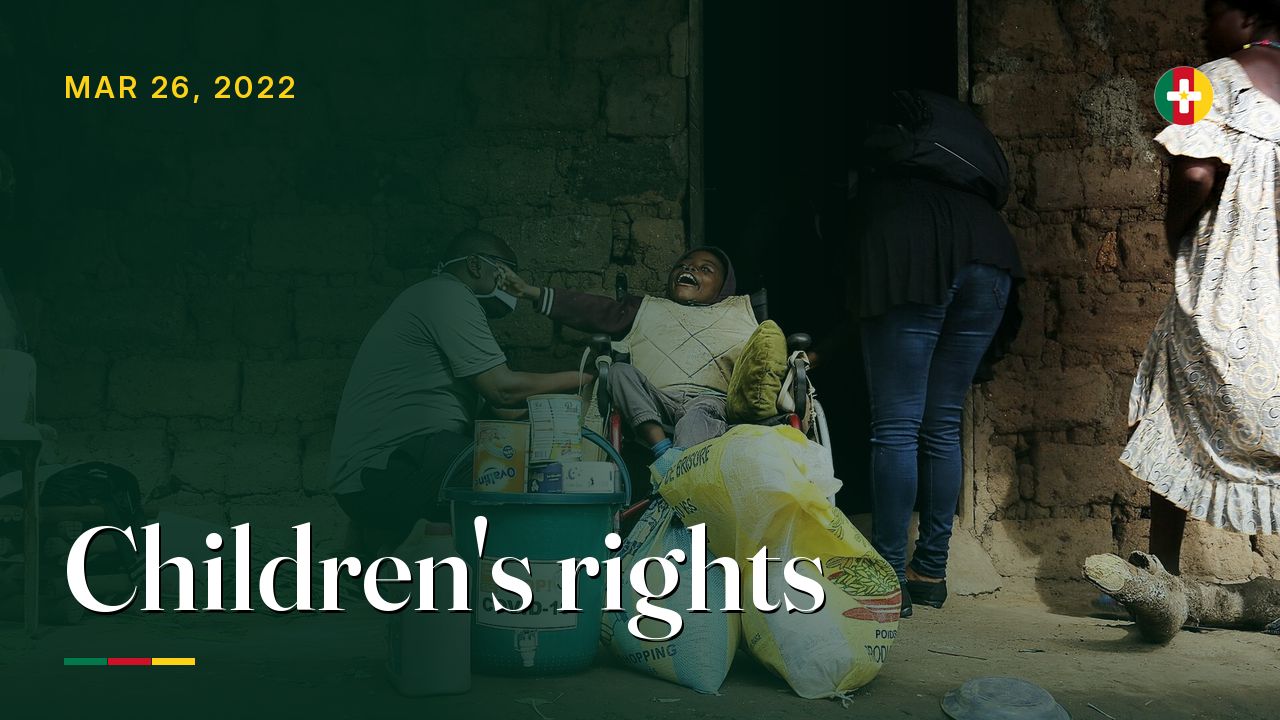
This policy briefing synthesizes key insights from the Cameroon Townhall for Healthcare Professionals meeting held on March 26, 2022, focusing on the theme "Safeguarding Children's Rights: The Cameroonian Context", presented by Dr. Judwin Ndzo, paediatrician, and Barrister Joyce Nyamboli, human rights lawyer.
Context
Abuse of children in Cameroon is common but rarely measured or reported, and practices such as harsh corporal punishment, child domestic servitude and early marriage are often treated as normal. The armed conflicts in the North West, South West and Far North have increased the number of displaced and separated children. Cameroon has ratified the main treaties, but the session found that prevention (safeguarding) is largely absent and that response (child protection) is under-resourced.
Key issues
- No prevention system. There are no general requirements for vetting, training or safeguarding policies in schools, hospitals, churches or other settings where adults work with children.
- Weak civil registration and records. More than two million children lack birth certificates, records are handwritten, and certificates of non-conviction are issued without real checks, so background screening is not possible.
- Limited places of safety. The state runs few residential places for children (three orphanages of about 40 beds each, as stated), so children reported as abused often remain with their abusers.
- Gaps in law and practice. A girl can marry at 15 with parental consent, FGM and breast ironing persist in some regions, and many cases end in family settlement rather than prosecution.
- Health workers not trained to recognise abuse. Neglect and physical abuse present in hospitals, but staff lack training, documentation standards and a referral pathway.
Discussion highlights
- Participants agreed that child abuse is not cultural, while recognising that cultural context shapes how it is addressed.
- The Victoria Climbié case showed that agencies failing to share information can be as deadly as the abuse itself.
- Economic dependence on abusers and the cost of legal action push families toward settlements.
- Children cannot be expected to report abuse themselves; adults and institutions must carry that duty.
Recommendations
- Adopt a national safeguarding framework. The Ministry of Social Affairs, with MINSANTE, the education ministries and justice, should adopt a safeguarding framework requiring policies, designated safeguarding leads and vetting in all settings that serve children. A first step is a joint working group to adapt existing models to Cameroon.
- Train health workers and set a hospital pathway. MINSANTE and training schools should add recognition of abuse and neglect to pre-service and in-service curricula, with refresher training every few years. Hospitals should adopt a written pathway for suspected abuse, starting with paediatric and emergency units in regional hospitals.
- Digitise civil registration and criminal records. Government should move birth registration and criminal records to a central digital database, make late registration simple and affordable, and use birth registration at immunisation and antenatal visits to reach unregistered children.
- Expand places of safety and kinship care. The Ministry of Social Affairs should fund emergency places of safety and formal support for kinship care in each region, working with faith-based and civil society organisations.
- Reform the law on marriage age. Parliament and the Ministry of Justice should set 18 as the minimum marriage age for both sexes and ensure rape cases cannot be closed through family settlement.
- Collect data on child abuse. Regional delegations and partners should begin routine reporting of child abuse cases seen in health facilities and social services, as a basis for planning.
Next steps
The town hall planned to continue the discussion with partners. The Chair announced a COVID-19 update, including Omicron BA.2, for the next session.
Conclusion
Cameroon has ratified the main treaties on children's rights, but without prevention, records, places of safety and trained staff, those rights stay on paper. Health workers, lawyers and the diaspora each have a role in making safeguarding everyone's responsibility in practice.
Meeting minutes
Agenda
- Welcome and opening remarks by the lead moderator, Elvis Ndansi
- Brief COVID-19 note by the Chair, Dr. Munoh Kenne Foma
- Introduction of the topic by Dr. Bryan Tegomoh
- Presentation by Dr. Judwin Ndzo on safeguarding children
- Presentation by Barrister Joyce Nyamboli on children's rights and the legal framework in Cameroon
- Discussion and Q&A
Opening remarks
- The lead moderator said the town hall meets every two weeks and had not skipped a session in almost two years. He recalled that the previous session profiled what town hall speakers are doing at home, in answer to the charge that the town hall only talks.
- He cited a publication stating that almost 50 percent of children in Cameroon have experienced some form of abuse, and set out the questions for the day: what counts as abuse, who should report it, the legal implications and prevention.
- The Chair said Omicron BA.2 was driving a rise in cases in the US and Europe and warned against complacency, deferring a full COVID-19 update to the next session. He said the topic had become a norm in Cameroonian society and was therefore neglected.
- Dr. Bryan Tegomoh said a key lesson of the pandemic was the need for stronger data systems in Africa. He noted that violence against children often happens where children expect protection (homes and schools), and recalled working at a district hospital during the crisis in the North West and South West, where separated children are exposed to exploitation and recruitment by armed groups.
Presentation
1. What counts as a safeguarding concern
Dr. Ndzo opened with a show-of-hands exercise on scenarios: a 12-year-old girl married to an older man in northern Cameroon, a toddler carrying wood, a supervised toddler cooking, a child left alone in a flat who died, and a 14-year-old left in charge of siblings during COVID-19. Responses varied, which she said showed that there is often no clear line between safe and unsafe. She defined safeguarding as all action to promote children's welfare and protect them from harm, not only the prevention of abuse, and stressed that it is everyone's responsibility.
2. Types of abuse and risk factors
She described neglect (the most common type), emotional abuse including bullying and exposure to domestic violence, physical abuse and sexual abuse, and said anyone can be an abuser. Young children and children with disabilities are at higher risk, as are children of carers with mental illness, substance misuse or poverty, isolated families, violent homes, and children displaced by war. She said this last group is large in Cameroon, including refugees from the Central African Republic and children displaced by the Boko Haram and North West and South West crises.
3. Scale of the problem in Cameroon
She said Cameroon data are scarce, and that fewer than a quarter of countries publish data on child homicide although almost all publish GDP. Figures she cited for Cameroon included more than two million children without birth certificates, high child mortality with a large share linked to neglect, almost half of children doing some form of work, child hawking that exposes children to injury and sexual abuse, and high rates of child marriage in some communities. Abuse goes under-reported, hidden by religion, culture and poverty, and has lasting effects on development, education and the economy.
4. Lessons from the Victoria Climbié case
She described the death in England in 2000 of eight-year-old Victoria Climbié, brought from Côte d'Ivoire to live with a great-aunt. She was known to 12 agencies, each of which had concerns, and died of hypothermia with 128 injuries and severe malnutrition. The failure was one of communication between agencies and of staff training, and it led to the UK's 2004 child protection reforms. UK professionals working with children must renew safeguarding training about every three years.
5. What a working system needs
An effective system needs an understanding of risk, strategic leadership, communication, trained staff, multi-agency working (health, schools, police, the judiciary, social care and the public) and a way to share information. Systems fail when staff do not recognise abuse, feel unable to raise concerns, do not know the pathway or fail to document. She cited UNICEF's six strategies (support for parents, helping children manage risk, changing social norms, services for children, laws and policies, and data and research) and concluded that child abuse is not cultural: abuse is abuse.
6. The legal framework
Barrister Nyamboli said the term used in Cameroon is child protection, which covers response to harm, while proactive safeguarding is largely absent. Cameroon is party to the UN Convention on the Rights of the Child (1989) and the African Charter on the Rights and Welfare of the Child, and to ILO Convention 138 on child labour. Article 45 of the Constitution gives ratified treaties precedence over national law, and the preamble of the 2008 amended Constitution affirms these rights. She said Cameroon's texts are well written, but resources and infrastructure to apply them are lacking.
7. Institutions and their limits
The Ministry of Social Affairs leads on vulnerable children, with regional and divisional delegations, and the National Commission on Human Rights and Freedoms is the main enforcement body, though its leadership is appointed by presidential decree. She said the state runs three orphanages of about 40 beds each, so an abused child reported to social welfare often has nowhere to go and stays with the abuser. Birth registration is due within 90 days, after which a court judgement costing about 4,500 FCFA is needed. Records are handwritten, so a certificate of non-conviction is issued for about 1,500 FCFA without a real background check.
8. Practices of particular concern
She described child domestic servitude of children sent to live with relatives, hawking, work on plantations, and a case she witnessed of a 15-year-old food seller raped repeatedly by a senior official. Girls can marry at 15 with parental consent against 18 for boys. Female genital mutilation persists around Kousseri in the Far North and in the Manyu area of the South West, and breast ironing in the Littoral. Corporal punishment, including pepper applied to children's eyes and genitals and children taken to police to be beaten, has become normalised. Figures she cited included one in two Cameroonians under 18, only 16 percent of identified orphans and vulnerable children receiving care, and adoption rules requiring married couples to show 15 years of marriage.
Discussion and Q&A
- A co-moderator asked how to respond to the argument of cultural relativism, for example that marrying a girl at 15 is acceptable in some cultures and that later ages are a Western standard. Dr. Ndzo said the age limit exists because girls' bodies are not ready for childbirth, and recalled a 13-year-old mother in Garoua who poured hot water on her newborn's umbilical stump on advice. Community engagement on why it is harmful is the way forward. Barrister Nyamboli said the argument has some basis, since human rights were long denied to Africans, but some practices are repugnant to natural justice. Ratified treaties apply regardless of culture; states may enter reservations, but safeguarding is about children making informed decisions.
- The same co-moderator cited a video of a teenage girl in Congo married to a much older man who had raped her, and asked when dialogue should be used and when the law must intervene. Barrister Nyamboli said the law should come in from the start: the rapist should be removed and those who gave the girl away held to account. She noted that until the penal code was amended in 2016, marriage to the victim could end a rape case. Families often choose settlement because the abuser is the breadwinner or offers compensation, and economic interest too often wins over the child's dignity.
- Dr. Bryan Tegomoh asked whether countries that have not ratified the African Charter see more abuse, and whether the Charter overrides the CRC. Barrister Nyamboli said both treaties have equal status. The African Charter adapts the CRC to African realities such as extended family care, informal fostering and the effect of civil wars on children. States with prevalent harmful practices often do not ratify, or ratify for diplomatic or financial reasons without implementing. Ratification matters because it creates treaty bodies to which victims can petition once local remedies are exhausted. Elvis Ndansi added that ratification does not prove good practice, and that Cameroon is known for good policies that are not implemented.
- A participant in Maryland, USA, said abuse is abuse in any culture, noted that diaspora communities in the US also face these issues, and asked for success stories and what a child who is abused can actually do. Barrister Nyamboli said children lack legal capacity, so a parent or an authority (social welfare, the police, or organisations such as Catholic Charities) must act; once a report is made the state prosecutes. Children need to learn their rights and how to report, and how to preserve evidence of rape. Convictions happen but are few, and many cases end in amicable settlement.
- She objected that the burden of reporting should not fall on a child, for example a 13-year-old in a relationship with a 45-year-old teacher. A co-moderator asked whether legal aid or pro bono help exists. Barrister Nyamboli said this is the gap: there are no safeguarding policies, staff training, vetting or sex offender registry in Cameroon, so protection depends on someone reporting. Elvis Ndansi contrasted university rules on staff relationships with students at Columbia University with abuse driven by power dynamics at the University of Buea.
Calls to action and closing
- The Chair had said a full COVID-19 update, including Omicron BA.2, would be given at the next session.
Next meeting
The next session was to include a full COVID-19 update.
Submitted by the Co-Moderators, Cameroon Town Hall for Healthcare Professionals.